Implementation pillar
BimEx
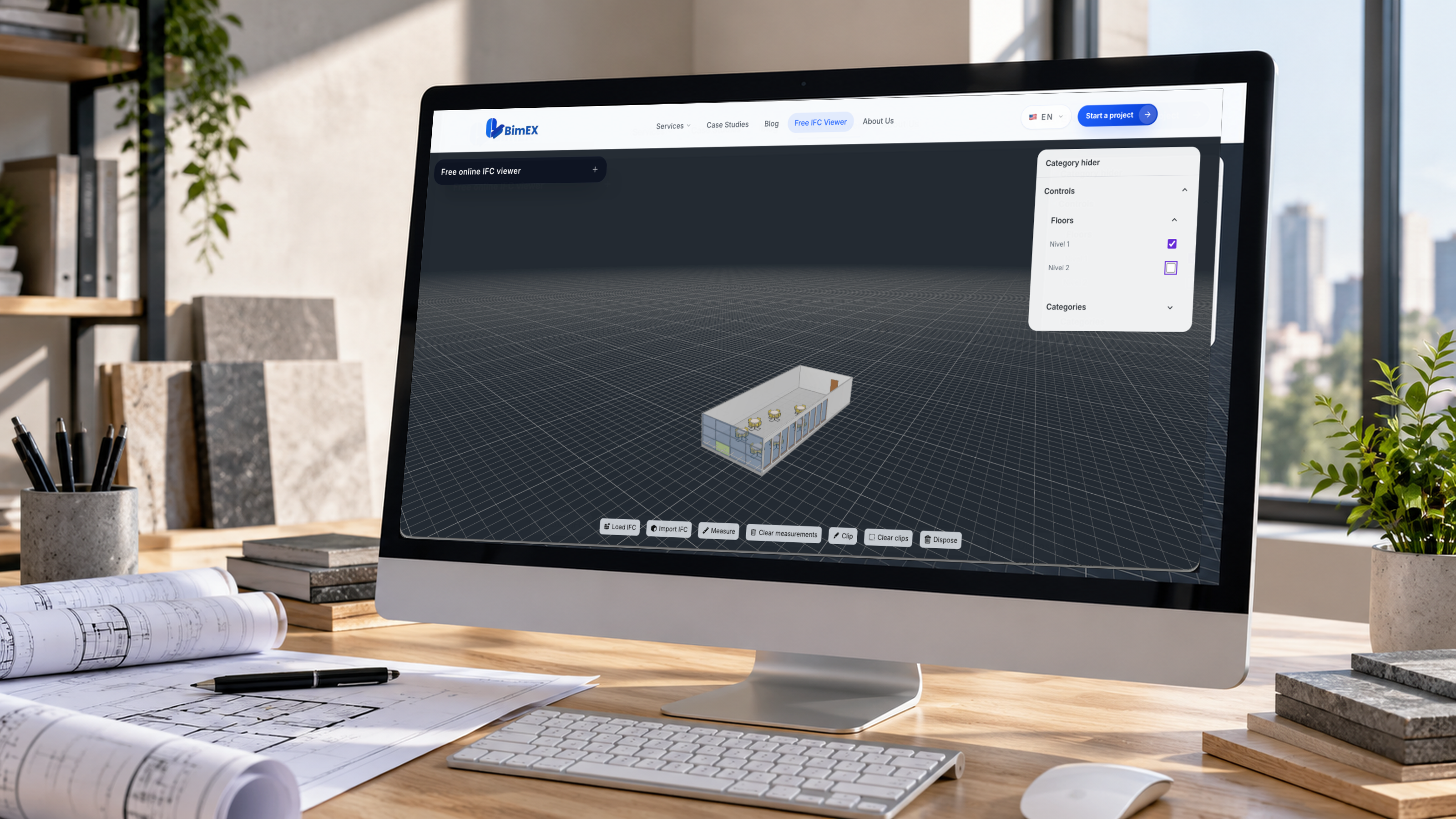
BIMEX is useful as a pillar because it connects AI positioning, BIM intelligence, and model-review workflows. The value is not just a viewer or landing page; it is the foundation for AEC teams to understand how project data can become easier to inspect, explain, and act on.
- Focus
- AI BIM intelligence platform
- Proof
- BimEx
- Next lane
- Related service



The operating friction
BIM and construction teams often deal with heavy files, fragmented review workflows, and coordination knowledge trapped in specialist tools. Bringing BIM workflows to the web requires careful handling of models, metadata, performance, permissions, and the practical decisions users need to make.
What we locked in early
Treat BIM model context as product data, not just a visual asset.
Design the experience around review and coordination workflows.
Keep AI assistance tied to project decisions such as detection, explanation, search, and reporting.
Plan the viewer, content, and product positioning together so the platform is understandable to AEC buyers.
When to buy and when to build
Buy when
- The team only needs standard desktop model review.
- Existing BIM tools already support the required collaboration workflow.
- There is no need for custom data, AI, or web-based access.
Build when
- Model review must connect to custom workflows, dashboards, AI, RFQs, or customer-facing product experiences.
- Stakeholders need controlled web access without relying on one desktop environment.
- The product needs a differentiated BIM intelligence layer.
Mistakes to avoid
Inside the related build
Assets before you scope
Related builds and categories
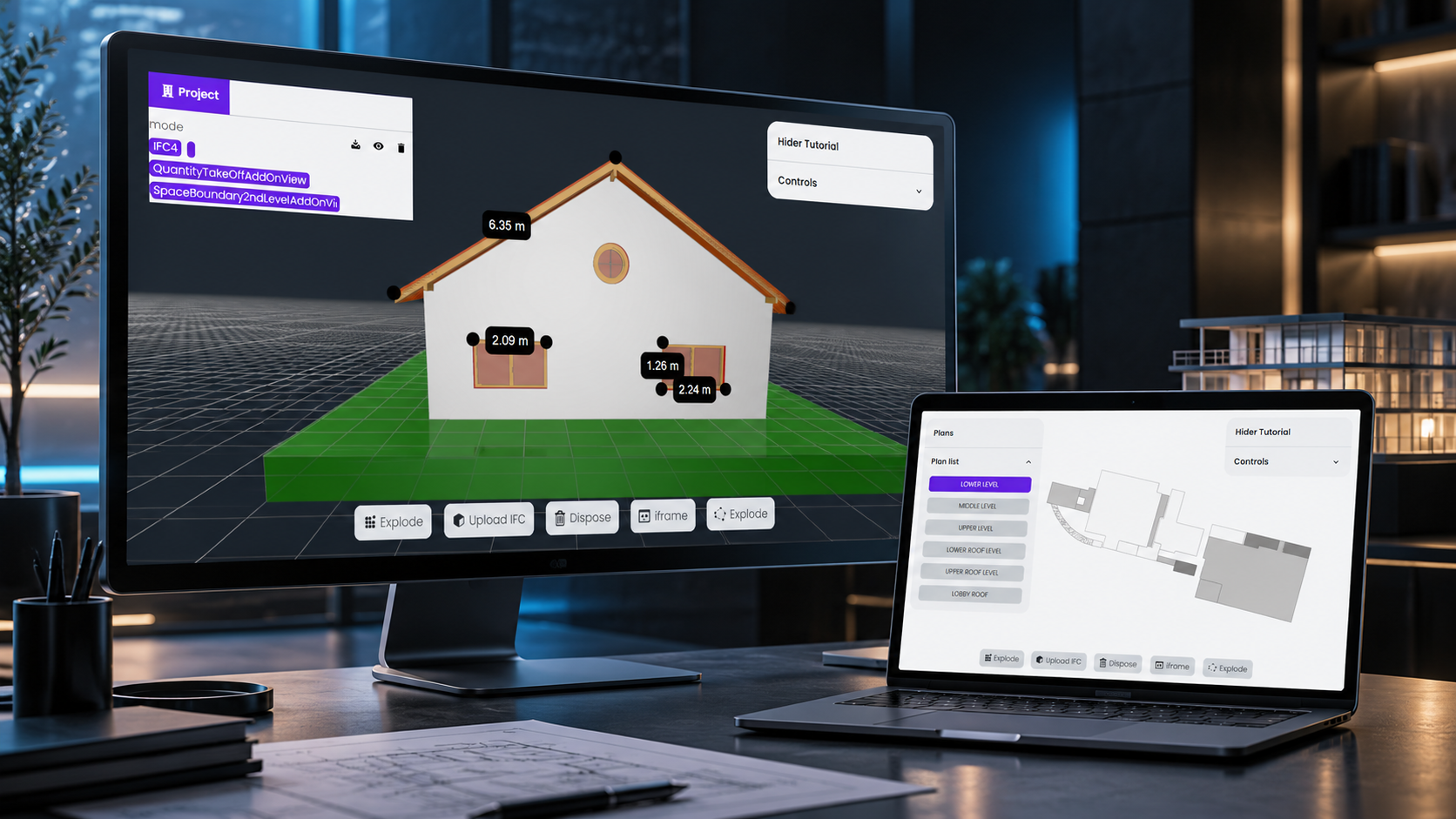
Revit IFC Viewer
Revit IFC Viewer is a browser-based BIM viewer for loading, inspecting, and coordinating IFC models exported from Revit and other BIM tools.
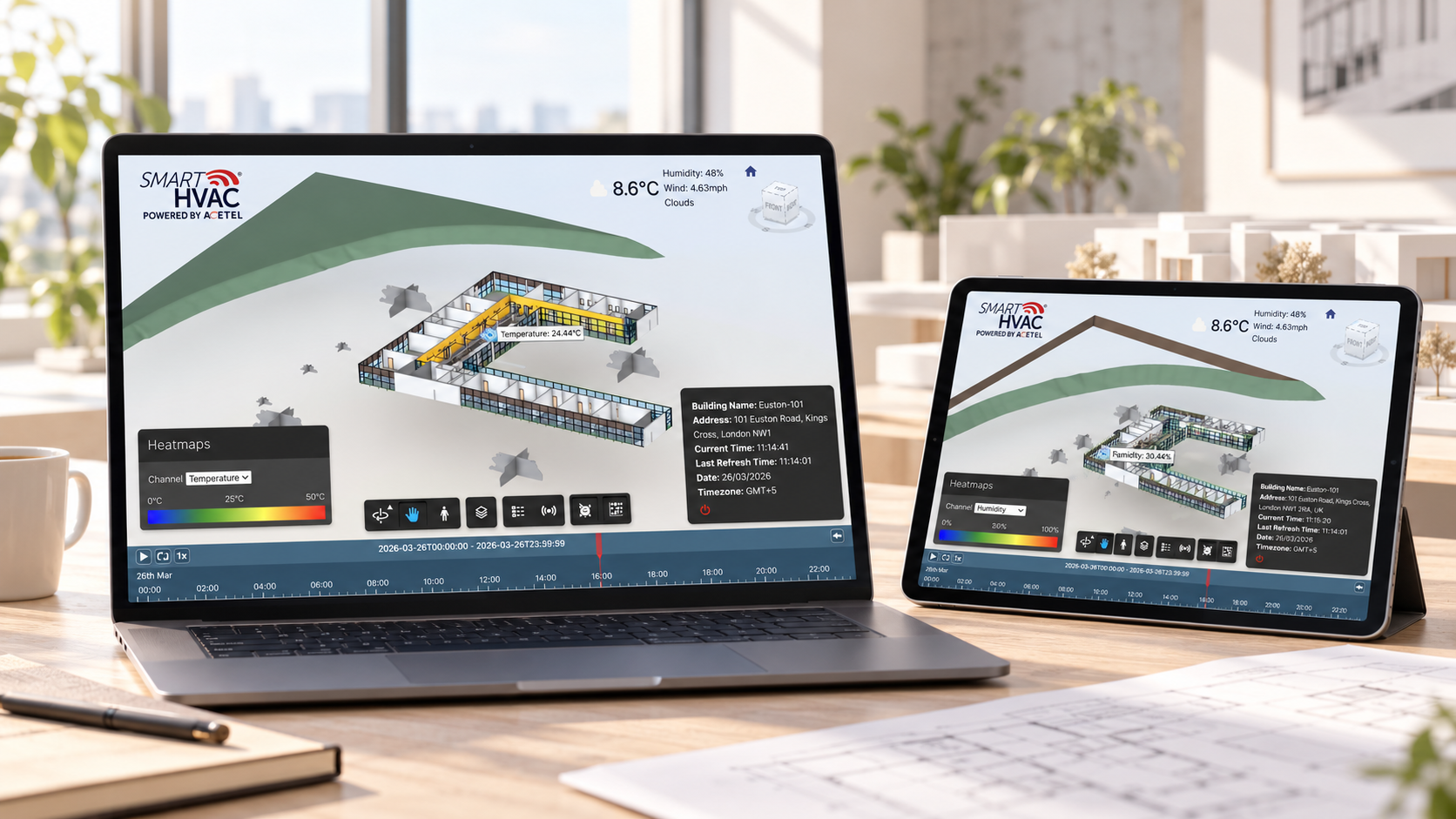
BIM IoT
BIM IoT is a smart building dashboard that connects BIM models with live and historical IoT sensor data. The application lets users view Autodesk models in the browser, inspect building floors, visualize sensor readings.
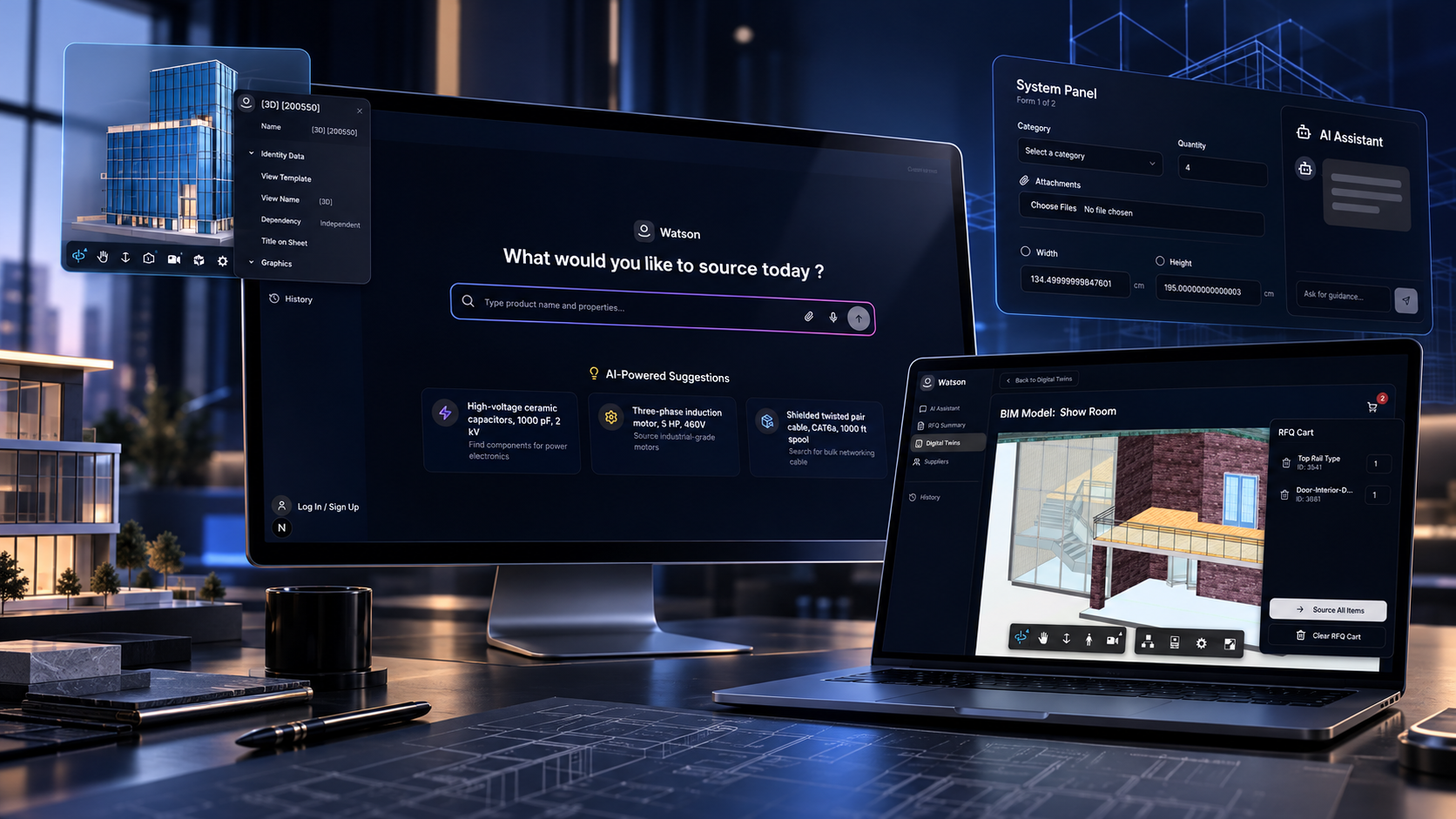
Watson Studio / TechSource AI
Watson Studio is an AI-powered procurement workspace that connects product sourcing, supplier outreach, RFQ management, and BIM-linked digital twin review in one workflow.
Straight answers
What is an AI BIM intelligence platform?
It is software that helps teams inspect, search, explain, or act on BIM model data using AI-assisted workflows connected to real project context. TkTurners treats this as an implementation decision, not a feature wishlist: confirm source-of-truth systems, ownership of exceptions, and the operator workflow before choosing buy vs build. The useful outcome is a system teams can run after launch, with clearer handoffs, fewer spreadsheet patches, and a path to expand automation once the foundation is stable. Buyers should ask what breaks when volume rises and who owns the failure path when an integration or AI answer is wrong.
When should an AEC team build custom BIM software?
A custom build makes sense when model review must connect to workflows, data, users, or AI capabilities that standard tools do not support well. TkTurners treats this as an implementation decision, not a feature wishlist: confirm source-of-truth systems, ownership of exceptions, and the operator workflow before choosing buy vs build. The useful outcome is a system teams can run after launch, with clearer handoffs, fewer spreadsheet patches, and a path to expand automation once the foundation is stable. Buyers should ask what breaks when volume rises and who owns the failure path when an integration or AI answer is wrong.
Can IFC viewers work in the browser?
Yes, but performance, model size, metadata access, permissions, and user workflow must be planned carefully. TkTurners treats this as an implementation decision, not a feature wishlist: confirm source-of-truth systems, ownership of exceptions, and the operator workflow before choosing buy vs build. The useful outcome is a system teams can run after launch, with clearer handoffs, fewer spreadsheet patches, and a path to expand automation once the foundation is stable. Buyers should ask what breaks when volume rises and who owns the failure path when an integration or AI answer is wrong.
Where does AI help BIM coordination?
AI can help with search, explanation, detection support, summaries, reporting, and helping non-specialists understand model context. TkTurners treats this as an implementation decision, not a feature wishlist: confirm source-of-truth systems, ownership of exceptions, and the operator workflow before choosing buy vs build. The useful outcome is a system teams can run after launch, with clearer handoffs, fewer spreadsheet patches, and a path to expand automation once the foundation is stable. Buyers should ask what breaks when volume rises and who owns the failure path when an integration or AI answer is wrong.
Implementation next
Need the BimEx pattern in your stack?
Book a discovery call. We'll map the closest proof, the buy-vs-build call, and the first clean implementation step.