Shopify development

Connect Shopify to the operations behind every order.

Build custom commerce workflows, apps, returns, portals, and integrations that reduce manual order, inventory, accounting, and support work.

See commerce proof
Commerce proof

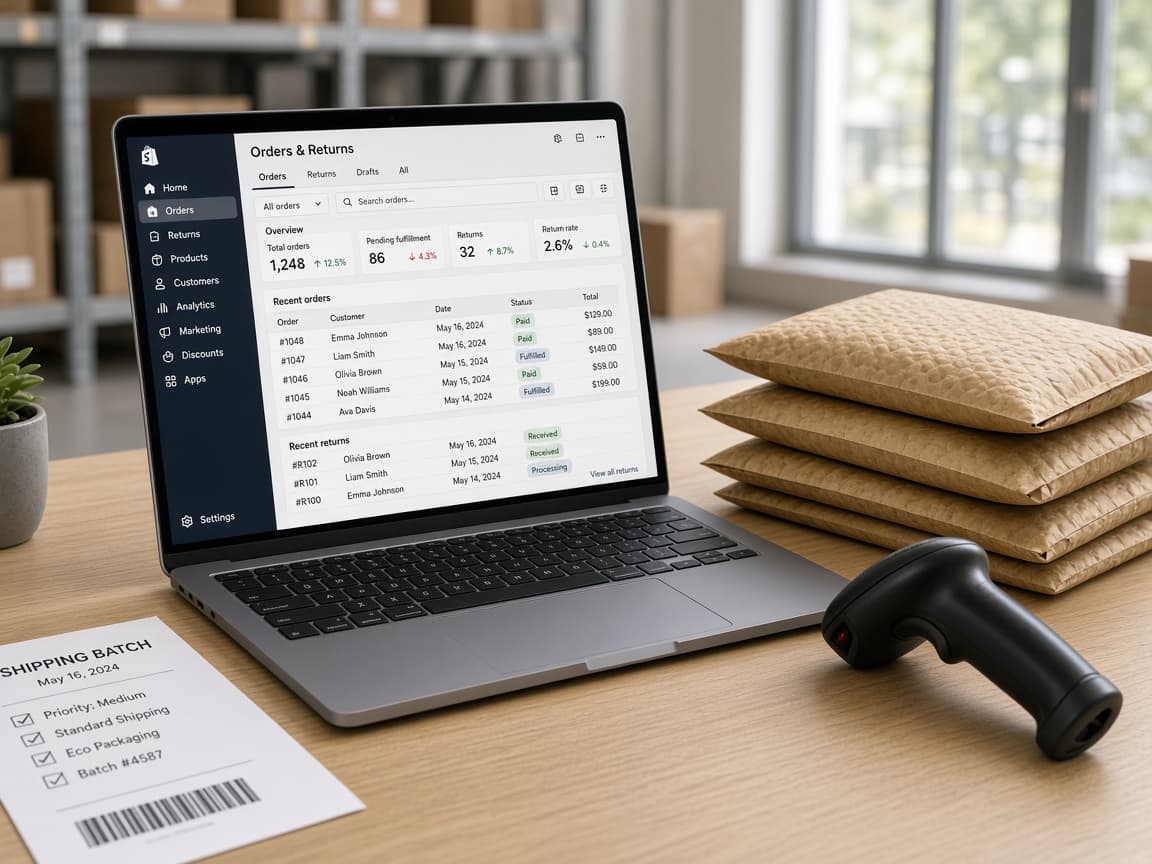
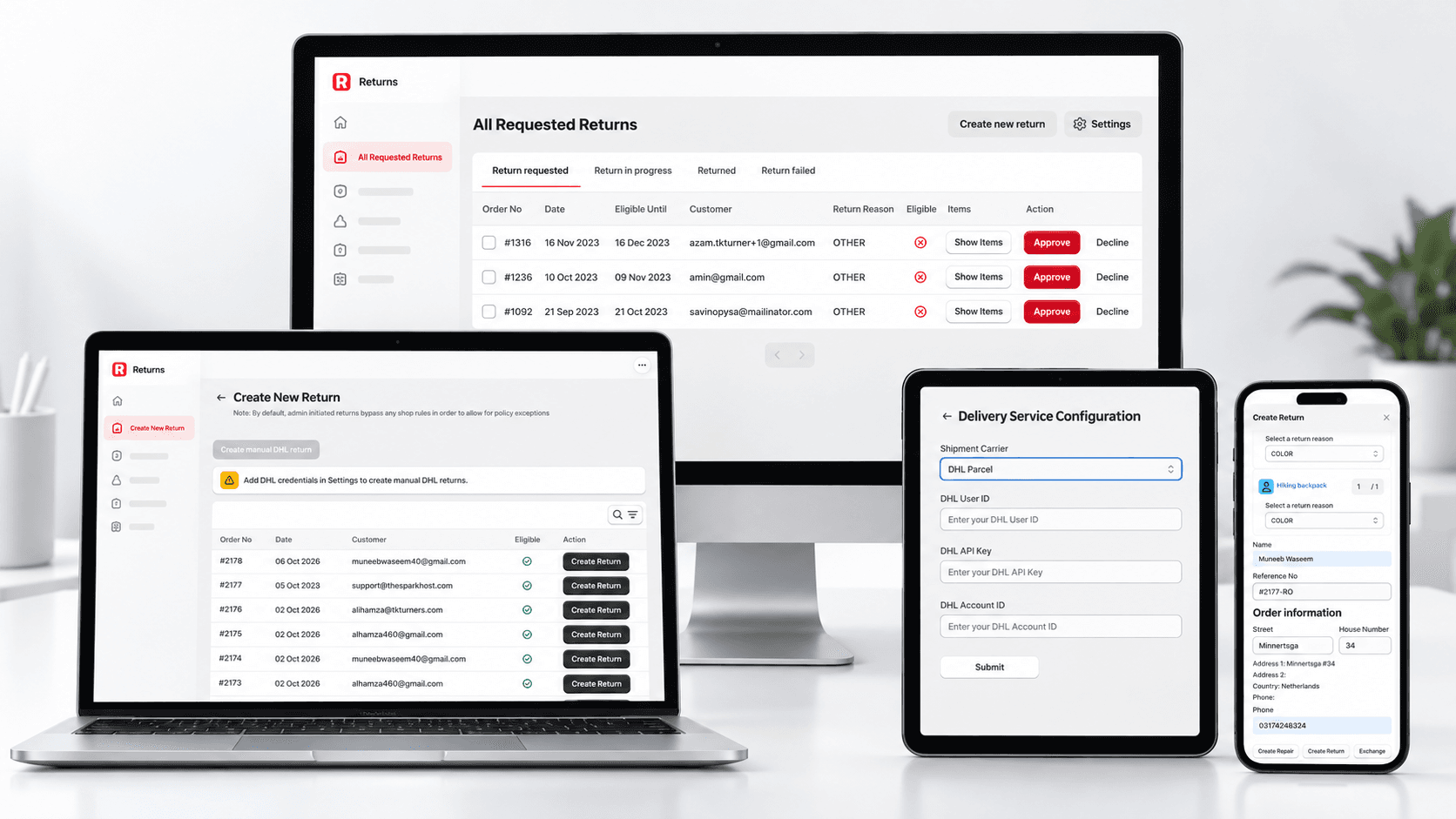
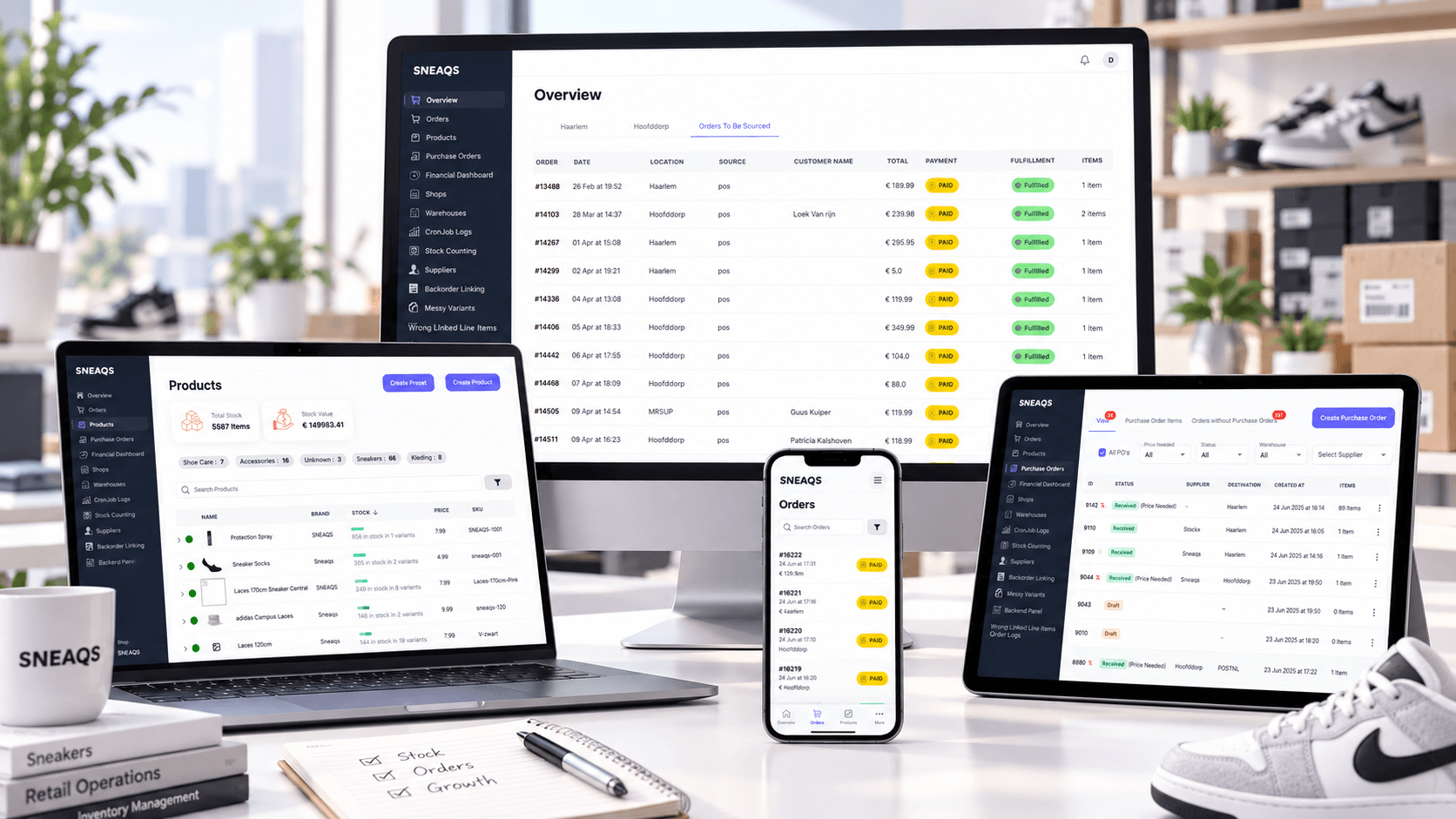
Returns, inventory, marketplace, booking, and service workflows connected to operating systems.

View commerce proof
Outcome
Commerce ops that are easier to control
Mechanism
Storefront, returns, ERP, CRM, and reporting flow
Risk reducer
Manual handoffs and data gaps mapped first
Returns
Workflow control
ERP
Inventory and finance sync
Portals
Customer self-service
Automation
Less support drag
Strategy call

Leave with the first move mapped.

The call is useful even if we do not build together. We use it to clarify what should happen next, what can wait, and what could make the project expensive.

Scope map
Users, systems, first release
Risk list
Unknowns to resolve early
Build path
Milestones and ownership
Range
Timeline and budget signals
Free checklist

Shopify Operations Workflow Checklist

Review order, return, inventory, accounting, support, and reporting handoffs before adding custom commerce logic.

  • Order handoffs
  • Return rules
  • Inventory impact
Open Shopify checklist
Problems and use cases

Built for Shopify workflows that standard apps cannot fully control.

Shopify is strong, but growing merchants often need custom rules, data movement, customer flows, and backend operations that do not fit a single app install.

Returns

Returns are handled through support threads

Customers, support, inventory, refunds, and reporting do not share a clean workflow.

ERP sync

Storefront and ERP data disagree

Orders, inventory, customers, refunds, fees, or product data need clearer sync logic and exception handling.

Subscriptions

Recurring workflows need control

Plans, invoices, device records, customer status, or accounting workflows need custom handling.

Portal

Customers need a better account experience

Customers need self-service visibility into orders, returns, documents, subscriptions, or support status.

Apps

Off-the-shelf Shopify apps create gaps

Apps solve pieces of the process but leave operations reconciling the rest manually.

Reporting

Commerce reporting needs cleaner data

Operators need reliable views across Shopify, payments, inventory, accounting, and support systems.

Desired transformation

Move from app-stack patching to cleaner commerce operations.

The outcome is a Shopify workflow that makes customer action, merchant review, inventory impact, payment state, and reporting easier to trust.

01

Cleaner return handling

02

Fewer manual support loops

03

Better sync visibility

04

Custom app control

05

More reliable reporting

Service offer

A Shopify workflow and app development lane for serious operations.

The engagement can include workflow mapping, custom Shopify app development, storefront-adjacent UX, portal development, API integrations, webhooks, automation, QA, deployment, and support.

Scoped offer

We start with the operational gap, not the app idea.

The best Shopify work comes from knowing which handoff is expensive: returns, inventory, payments, support, accounting, or reporting.

01

Workflow audit

Map the storefront, customer, and backend handoffs.

View phase checklist
  • Order flow
  • Return flow
  • Inventory impact
  • Reporting needs
02

App and UX design

Design the customer, merchant, or staff workflow.

View phase checklist
  • Customer forms
  • Merchant review
  • Admin screens
  • Status logic
03

Development

Build the Shopify app, portal, or integration layer.

View phase checklist
  • Shopify APIs
  • Webhooks
  • Backend services
  • ERP/accounting sync
04

Launch

QA the workflow across commerce systems.

View phase checklist
  • Test orders
  • Edge cases
  • Deployment
  • Support handover
Capabilities

Shopify work that connects storefront experience to operations.

Custom Shopify development is most valuable when it improves the business workflow around the storefront, not only the storefront UI.

Custom Shopify apps

Purpose-built apps for merchant workflows.

View capabilities
  • Admin screens
  • Embedded app UX
  • Custom rules
  • Private workflows

Commerce workflows

Operational flows around customer and merchant action.

View capabilities
  • Returns
  • Subscriptions
  • Customer portals
  • Service requests

Integrations

Systems that need clean commerce data.

View capabilities
  • ERP
  • Accounting
  • CRM
  • Support
  • Inventory

Automation and reporting

Visibility and exception handling after launch.

View capabilities
  • Webhooks
  • Alerts
  • Dashboards
  • Exports
Shopify solution types

What we can build around Shopify.

The right solution depends on whether the pain is customer-facing, operations-facing, or integration-facing.

01

Custom return workflows

Request intake, eligibility, merchant review, status, and inventory impact.

02

Customer portals

Account visibility, invoices, subscriptions, devices, payments, and support status.

03

Shopify integrations

ERP, accounting, CRM, support, payment, inventory, and reporting connections.

04

Commerce automations

Exception routing, alerts, reconciliation support, and operational follow-up.

05

Custom apps

Embedded or private apps for workflows standard apps do not handle well.

Process

A Shopify process that starts from the operating gap.

Shopify development is scoped around customer action, merchant review, data movement, and backend visibility before implementation begins.

01

Fit and workflow discovery

We clarify the users, business workflow, systems, constraints, and success criteria before recommending a build path.

02

Roadmap and architecture

The first release, integration boundaries, technical risks, milestones, and acceptance criteria are turned into a practical plan.

03

Design and build iterations

UX, frontend, backend, data, integrations, and QA move in visible increments with working demos at key checkpoints.

04

Launch and handover

Deployment, monitoring guidance, documentation, source-code access, and post-launch stabilization are handled before the work is closed.

Risk reducers

Controls that reduce commerce workflow risk.

Shopify projects fail when store behavior, webhooks, ERP sync, payments, and support workflows are tested too late. The process keeps them visible.

Technology stack

Shopify stack decisions tied to the workflow.

Common options include Shopify APIs, Admin API, Storefront API, webhooks, Hydrogen or custom frontend work where appropriate, Next.js, Node.js, TypeScript, PostgreSQL, payment systems, accounting APIs, CRM APIs, and automation tools.

Shopify APIs and webhooks for reliable commerce events.

Custom backend services when business rules do not belong in theme code.

ERP/accounting integration patterns for inventory, invoices, payments, and reporting.

Customer portal UX when buyers need self-service beyond default account pages.

Operational dashboards and alerts for exceptions.

Milestone-based delivery

The project is broken into decision checkpoints so scope, cost, and quality stay visible while the product is still adjustable.

Staging access

You can review working flows in a controlled environment before they reach customers, staff, or production systems.

Acceptance criteria

Important user flows, integration behavior, edge cases, and handover expectations are agreed before final sign-off.

Source-code access

Repository access and handover expectations are clarified so the product does not become trapped with the delivery team.

QA and release support

Functional testing, responsive checks, deployment support, and post-launch defect handling are treated as part of delivery.

Founder-led scoping

Senior product and engineering judgment stays close to the engagement instead of disappearing after the sales conversation.

Comparison

Why not install another Shopify app?

Apps are useful until the workflow crosses systems or needs custom business rules. At that point, operators often need integration and workflow design, not another isolated tool.

Workflow control

Built around your return, order, payment, inventory, or support rules.

VS

Workflow control

The merchant changes the process to fit app settings.

System sync

ERP, accounting, CRM, and reporting handoffs are planned.

VS

System sync

Manual reconciliation continues around app boundaries.

Customer clarity

Customer status and merchant review stay part of the same workflow.

VS

Customer clarity

Support teams keep explaining what the systems do not show.

Before you build

Protect the store while improving the workflow behind it.

Custom Shopify work should reduce operational drag without creating avoidable checkout, inventory, or support risk.

01

Will this break the live store?

We plan staging, test orders, app permissions, rollout steps, and rollback expectations before production changes.

02

Should this be an app, automation, or integration?

The choice depends on where the workflow lives, who uses it, and which systems must update reliably.

03

Can this connect to accounting or ERP tools?

Source-of-truth rules, sync timing, exception handling, and reporting needs are mapped before build starts.

FAQ

Questions buyers ask about shopify development.

These answers reduce the practical uncertainty that usually appears before a serious service conversation.

01

Can TkTurners build custom Shopify apps?

Yes. We can build custom or private Shopify apps when a merchant workflow needs rules, admin control, integrations, or UX that standard apps do not cover.

02

Do you handle Shopify integrations?

Yes. Shopify can be connected to ERP, accounting, CRM, support, payment, inventory, and reporting systems depending on the workflow.

03

Can you build a custom returns workflow?

Yes. Returns workflows can include request intake, eligibility logic, merchant review, customer status, inventory impact, refund context, and reporting.

04

Can you improve an existing Shopify workflow?

Yes. We can audit the current app stack and manual process, then scope custom development or integration fixes around the highest-friction handoff.

05

Do you do theme-only Shopify work?

We can support storefront work when it is tied to a larger operational goal, but this service is strongest for apps, workflows, portals, integrations, and automation.

06

What affects Shopify development cost?

Cost depends on app complexity, Shopify APIs, backend logic, integrations, customer flows, admin screens, QA, and support needs.

07

Can Shopify data feed AI automation?

Yes. Shopify data can support AI search, summaries, support workflows, reporting, and operational automation when permissions and data quality are handled correctly.

Next step

Bring the project, workflow gap, or current system to one strategy call.

We will use the conversation to understand fit, scope, risk, required systems, and the first useful release before recommending a delivery path.

Useful call inputs

  • What outcome you need
  • What systems or users are involved
  • What has already been tried