01
Autonomous execution
Capture, classify, route, draft, and update without turning the workflow into a black box.
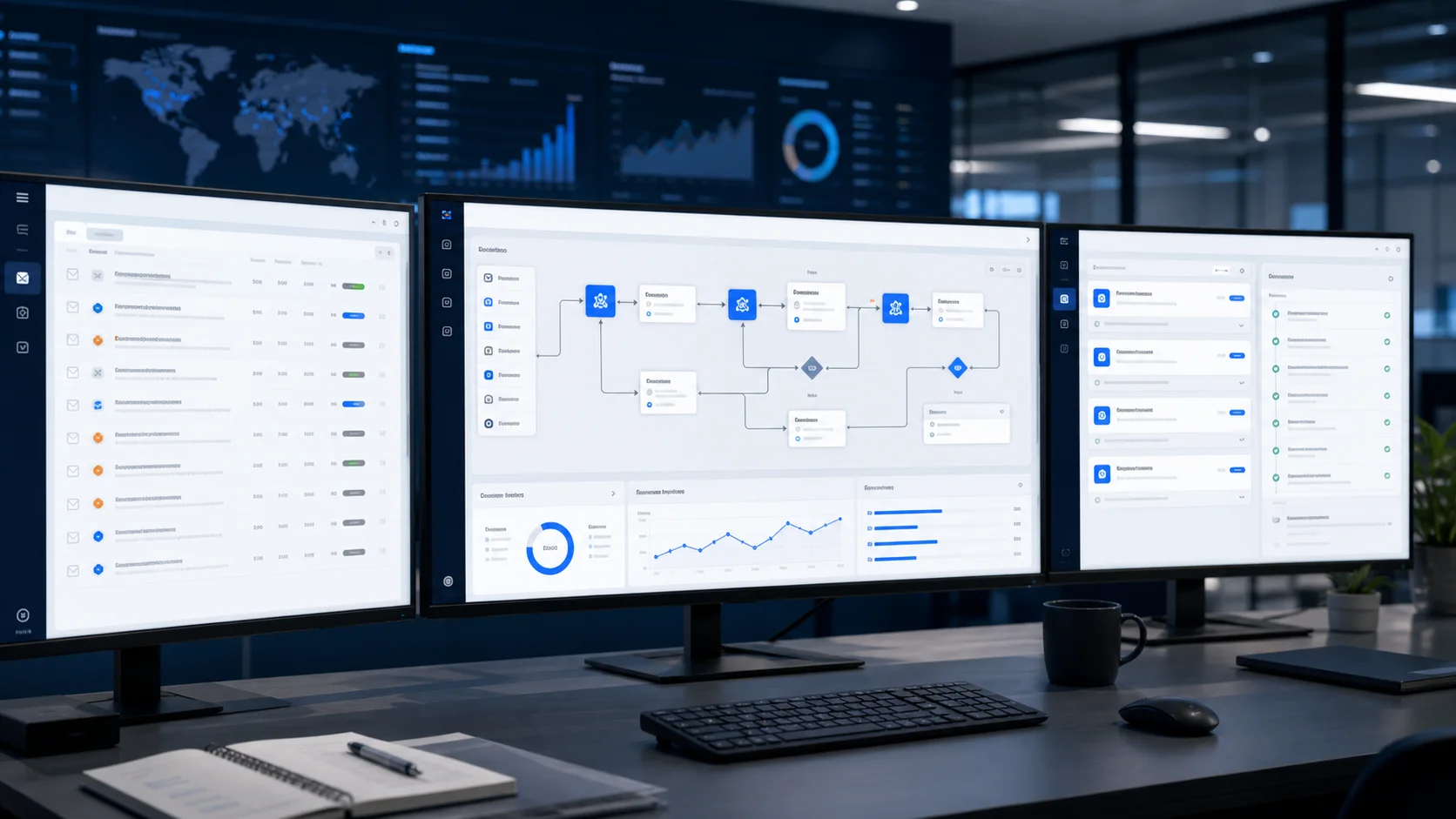
We build autonomous AI systems that capture signals, make bounded decisions, and push the next action forward inside the tools your team already uses. We also repair brittle legacy automations before they slow the operation down again.
01
Capture, classify, route, draft, and update without turning the workflow into a black box.
02
Fix aging Zaps, Make scenarios, webhook chains, and AI flows that no one fully trusts anymore.
03
n8n, OpenAI, Gemini or Gemma, Make, Zapier, CRM, support, and internal ops tooling.
Working principle
No disconnected demos. No automation sprawl. Just cleaner execution inside the operating stack.
The best first systems are the ones with repeated judgment, obvious handoffs, and too much human time wasted on first-pass work.
01
Lead intake, support first response, qualification, routing, and follow-up that happen fast enough to keep momentum.
02
Summaries, drafting, lookups, and next-step suggestions that help operators move faster inside daily workflows.
03
Repair brittle Make or Integromat scenarios, Zapier sprawl, outdated prompts, and undocumented API glue.
04
Push outcomes back into the CRM, inbox, help desk, Slack, ERP, and ops stack so the work actually keeps moving.
Built for businesses that want AI to move real work inside real systems, not sit off to the side as another experiment.
Review case studies where AI was tied to business data, learning workflows, reporting, mobile coaching, and product operations instead of being treated as a disconnected feature.
Implementation examples where AI is connected to business data, product workflows, reporting, content, training, and operating systems instead of isolated demos.
Learning platform implementations that connect content, course structure, tutoring, AI practice, assessments, and backend content operations.
If your team already runs on these platforms, we can build on top of them, connect them properly, and clean up what is already there.
We also stabilize older Make or Integromat builds, Zapier chains, hand-written webhook glue, and legacy automations that became too fragile to trust.
We start where the manual drag is loudest, fix the weak handoffs first, then deploy the smallest useful autonomous layer.
Find the repeated decisions, broken handoffs, and weak context that are slowing the team down.
Clean up the legacy logic, brittle steps, and system gaps before more automation compounds the mess.
Implement the bounded AI system, wire it into the stack, and make sure the output lands where it is needed next.
Monitor quality, tune context and routing, and decide which adjacent workflow is worth automating next.
The goal is practical clarity: where AI fits, when legacy automation needs repair first, and how the work gets rolled out safely.
Yes. Most of the work is done inside the stack a team already uses, whether that means n8n, Make, Zapier, OpenAI, CRM tooling, support systems, or internal ops software.
Use the call to identify whether you need a new autonomous system, a legacy automation repair, or the cleanest mix of both.