Course content is uploaded but hard to maintain.
All case studiesIndustry problem
Custom LMS Platform Planning
Training companies, education teams, and organizations that need learning workflows beyond a standard course library. Learning platforms fail when content, learners, instructors, assessments, and admin operations are not designed as one workflow. A generic LMS can host content, but custom products are often needed when practice, tutoring, AI feedback, or content conversion are part of the operating model.
Common failures
Where the workflow usually breaks
Learner progress does not connect to feedback or next actions.
Tutoring, scheduling, or practice workflows live outside the LMS.
AI features do not support measurable learning outcomes.
Admins cannot inspect content quality or workflow exceptions.
System requirements
What a custom system needs to handle
Course and module structure that matches how training is delivered.
Learner, instructor, and admin roles with clear permissions.
Assessment, progress, practice, and feedback workflows.
Content operations for uploads, conversion, audio, transcripts, or AI modules.
Reporting that helps teams improve the training experience.
First step
Start with the operating map
Map the learning operation from content creation to learner outcome before choosing LMS features or AI modules.
Internal proof cluster
Related proof and next steps
Voxento — AI Communication, Transcription & Course Audio Modules
Voxento was focused on AI-powered communication and intelligent audio processing.
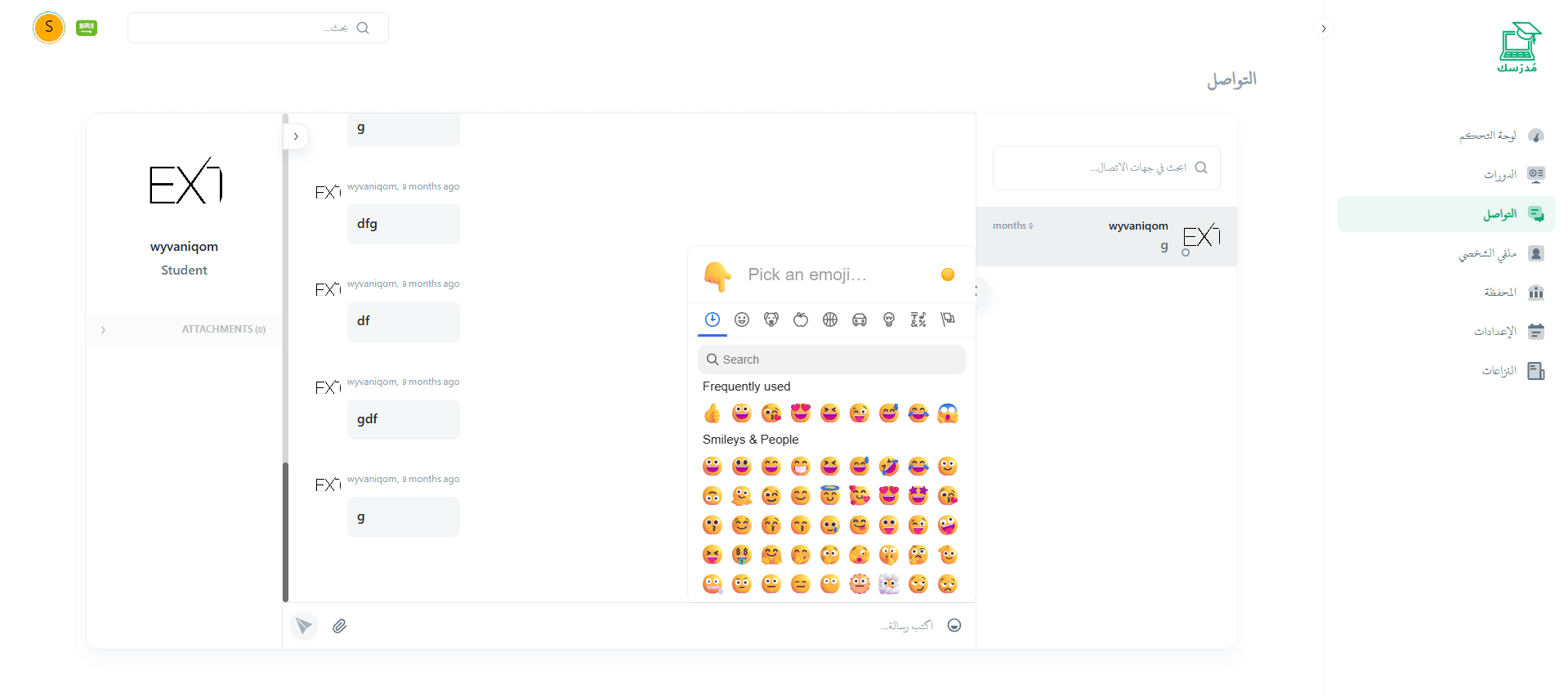
Mudrsec LMS / Arabic LMS
Mudrsec LMS was developed as an Arabic-focused learning management platform designed to support online education, course delivery, tutor interaction, and structured learning experiences.
Slide Processing Microservice / Learning Content Conversion / Voxento Backend Service
Slides Conversion
Slides Conversion is a dedicated Node.js microservice that ingests uploaded slide decks and converts them into interactive learning content.
Search questions
Questions this page helps answer
When should a company build a custom LMS?
A custom LMS makes sense when learning depends on workflows, roles, practice, feedback, integrations, or content operations that standard LMS tools cannot support well.
Where can AI help an LMS?
AI can support role play, voice practice, feedback, transcription, content conversion, search, and learner assistance when tied to clear learning goals.
What should be planned before LMS development?
Plan learner roles, course structure, content operations, progress tracking, assessments, admin workflows, and reporting needs.