Return requests arrive in email or chat without structured order context.
All case studiesIndustry problem
Ecommerce Returns Workflow Systems
Ecommerce operators and Shopify merchants whose return process has outgrown manual support threads or default return tooling. Returns become an operating problem when customers cannot see what happens next, support teams answer the same status questions, and merchants review exceptions without a clear workflow. The issue is rarely just the form. It is the chain of decisions behind intake, eligibility, inventory, refund handling, and customer communication.
Common failures
Where the workflow usually breaks
Eligibility rules live in policy documents instead of the workflow.
Support teams manually update customers about status and next steps.
Inventory and refund impact is reviewed after the return instead of during the workflow.
Reporting does not show where return friction is coming from.
System requirements
What a custom system needs to handle
A customer-facing return request flow tied to order data.
Merchant review screens for approval, rejection, exceptions, and status.
Policy logic that can evolve without rewriting the whole experience.
Links to inventory, support, payment, or reporting systems where needed.
Clear audit trails for high-value or exception-heavy returns.
First step
Start with the operating map
Map the return journey from customer request to final resolution, then identify which steps are routine, which need review, and which systems must stay in sync.
Internal proof cluster
Related proof and next steps
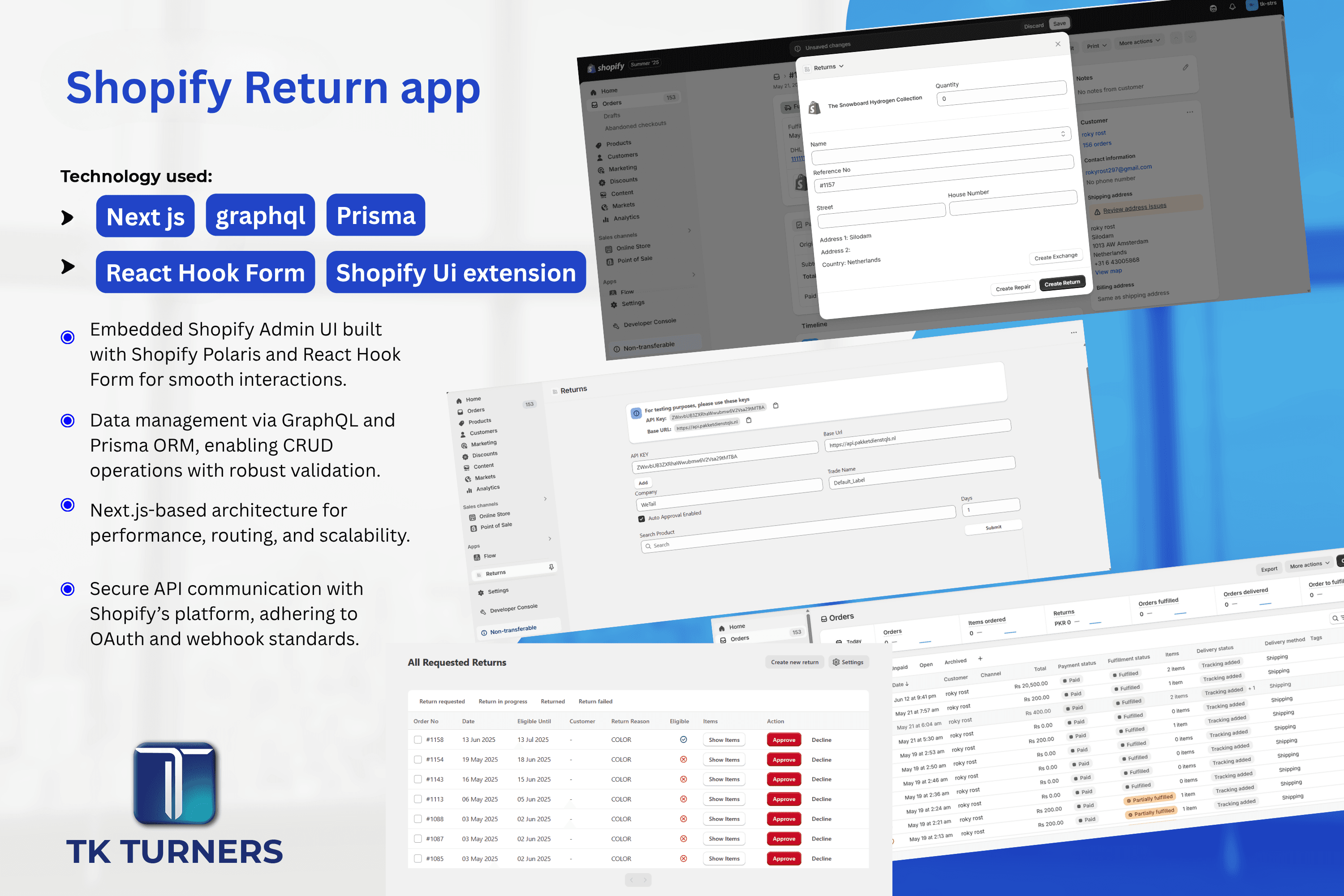
Shopify Return App
This is a custom Shopify app built using Next.js, GraphQL, Prisma, React Hook Form, and Shopify Polaris.
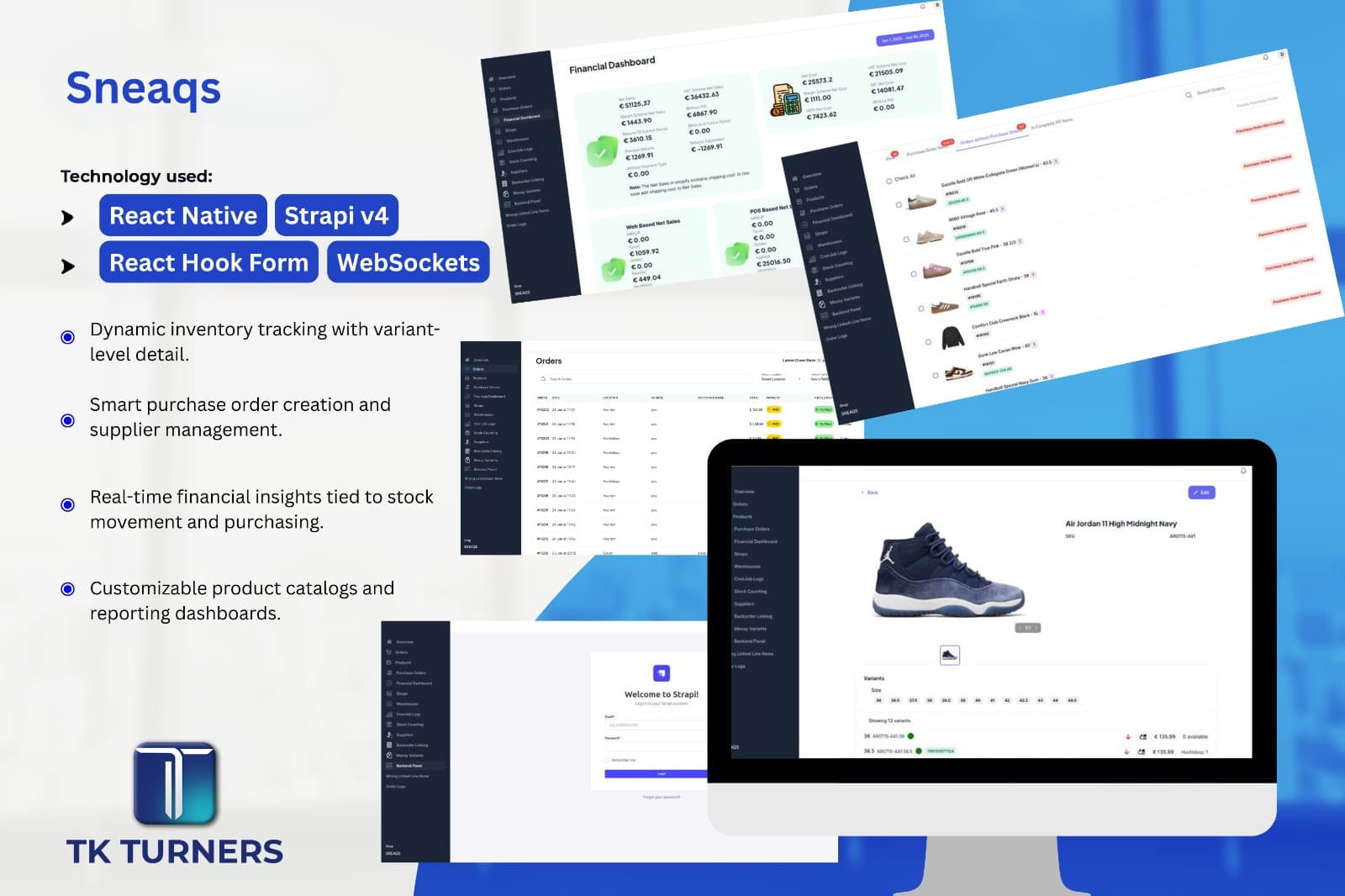
Sneaqa
Sneaqs is a powerful web application designed to streamline stock management, financial tracking, and inventory control for businesses.
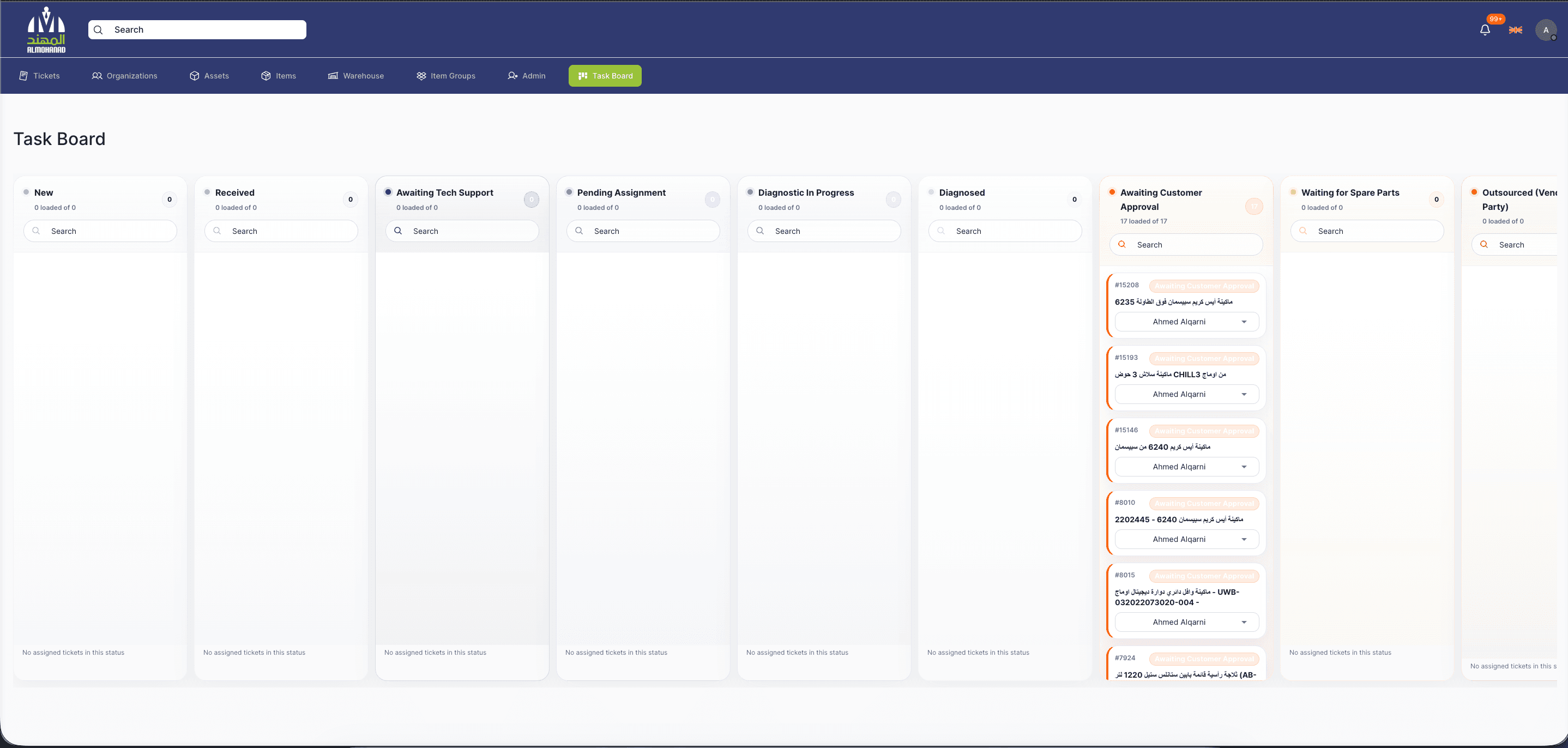
Service Management Software
Service Management Software is a full-stack operations platform for managing service tickets, customer organizations, assets, appointments, SLAs, technicians, inventory, warehouses, notifications, and audit history from...
Search questions
Questions this page helps answer
When should an ecommerce brand customize its returns workflow?
Customization makes sense when default tools create support load, policy workarounds, poor status visibility, or manual reconciliation with inventory and payments.
Should returns be fully automated?
Routine returns can often be automated, but exceptions, fraud risk, high-value orders, and policy edge cases usually need human review.
What systems should returns connect to?
Returns may need order data, inventory, support, payment, warehouse, and reporting systems depending on the operating model.