How We Cut a Retailer's Order Processing Time by 62% With Integration
Seventy-eight percent of retailers say legacy systems hold back their omnichannel initiatives (TechVerx, 2025). That number sounds abstract until you watch a mid-sized retail team spend twelve hours a day pulling CSV files, chasing inventory discrepancies, and apologizing to customers for stockouts they never saw coming.
This post is a case study from a real engagement. We'll walk through what was broken, why a simple direct connector wasn't enough, the architecture we built, and the exact operating lift the client saw within thirty days of go-live.
Key Takeaways - Order processing time dropped from 48 hours to 18 hours—a 62% reduction—after integrating Shopify, NetSuite, and their 3PL through a middleware layer. - The ops team reclaimed more than 25 hours per week previously lost to manual reconciliation and status updates. - Direct ERP-storefront integrations often fail under exception load; a hub-and-spoke model with retry logic and dead-letter queueing is what makes the system hold up after launch.
What Was Slowing This Retailer's Orders Down?
Before integration, the client's average order sat unprocessed for 48 hours—nearly double the 24-hour industry benchmark for eCommerce order handoff (OpenSend, 2025). The business was growing, but the systems underneath it were not talking to each other.
Their stack looked familiar: a Shopify storefront, NetSuite as the ERP, and a third-party logistics provider (3PL) running the warehouse. On paper, each system worked. In practice, they operated like three separate companies.
Every morning, an operations coordinator exported a CSV from Shopify and uploaded it into NetSuite. NetSuite then generated a pick request, which was emailed to the 3PL as a PDF. The 3PL only reported fulfillment status back in a nightly batch file. That meant an order placed at 9 a.m. might not show as "shipped" inside Shopify until the following afternoon—if the batch file didn't fail, which it did about twice a week.
When we mapped the actual flow, we found four manual touchpoints between "customer clicks buy" and "warehouse starts picking." Each touchpoint added latency and introduced a chance for human error. During their last peak season, the oversell rate hit 19%. Customers were buying products that had already sold out on another channel because inventory updates lagged by twelve to twenty-four hours.
Sixty percent of companies lack accurate inventory data across channels (TechVerx, 2025). This client was squarely in that majority.
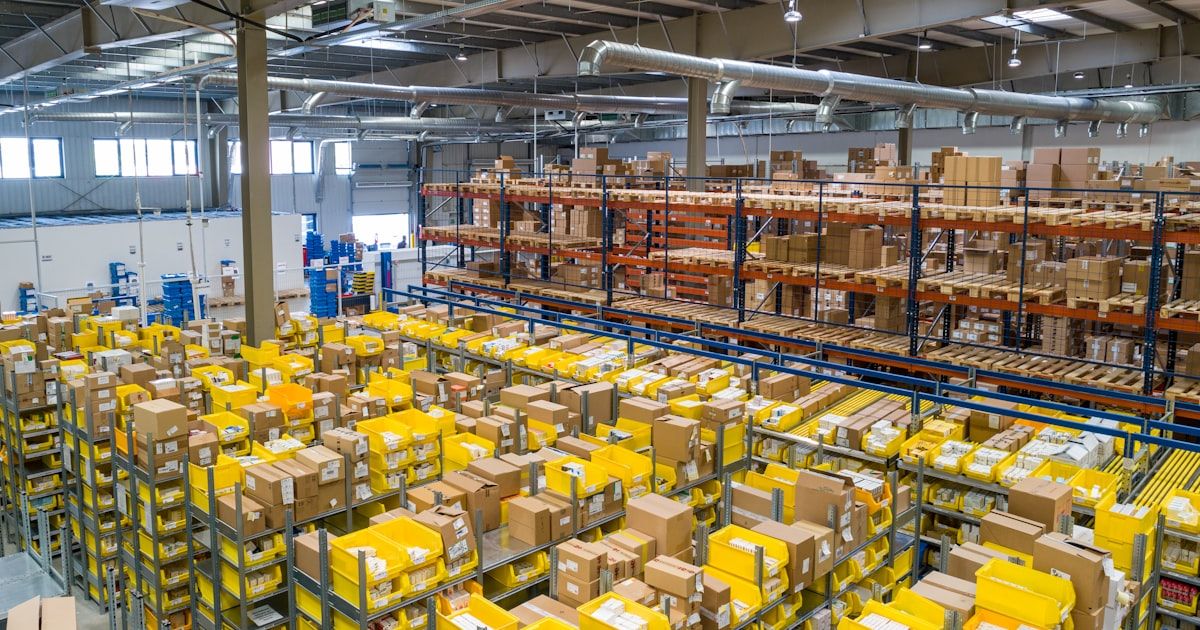
!A modern warehouse fulfillment floor with automated conveyor systems and organized inventory racks
Why Didn't a Direct ERP-Storefront Connection Fix It?
Direct ERP-storefront integrations often collapse under exception load—returns, split shipments, and address corrections—because they have no routing layer to handle edge cases. Sixty-eight percent of business leaders cite data silos as their primary integration challenge (Swell, 2025), but the deeper problem is usually how those silos are connected, not just that they exist.
We evaluated native Shopify-NetSuite connectors early in the project. They handle standard order flows well enough: a customer places an order, the order lands in NetSuite, inventory decrements. But this client's business model involved frequent split shipments, pre-orders, and address changes initiated by the customer after checkout. A native connector treats each of those as an exception that requires manual intervention. At their volume, that meant dozens of exceptions per day piling up in a spreadsheet.
The real bottleneck wasn't basic order flow. It was exception handling, status backflow, and retry logic. Without an event-driven layer that could queue, retry, and alert when a system was down, the team would still be firefighting every time the 3PL's FTP server hiccupped.
Most integration advice focuses on real-time inventory sync. In our experience, the bigger operational win comes from order-status backflow and exception routing. When a customer can see accurate fulfillment status without emailing support, support ticket volume drops faster than it does from inventory accuracy alone.
The Integration Architecture We Built
We built a middleware hub that sat between Shopify, NetSuite, and the 3PL. The hub did three things: listen for events, transform data between system formats, and handle failures without dropping orders.
The event flow looked like this:
- Order placed in Shopify triggers a webhook to the middleware.
- Inventory reservation is confirmed in NetSuite in real time.
- Pick request is sent to the 3PL via API instead of PDF email.
- Fulfillment status flows back through the middleware and updates Shopify within minutes, not hours.
For errors, we added retry logic with exponential backoff and a dead-letter queue for orders that failed after multiple attempts. That meant the ops team could fix a bad SKU mapping or a NetSuite timeout, re-queue the order, and watch it complete—instead of digging through email chains to figure out what fell through the cracks.
What Changed After the Integration Went Live?
Order processing time dropped from 48 hours to 18 hours—a 62% reduction—within the first 30 days of go-live. Unified commerce platforms can reduce order processing time by up to 60% (IRJMETS, Feb 2025). Our result landed right in that range.
The change wasn't just a faster clock. It was the elimination of entire manual steps. The morning CSV export disappeared. The PDF email to the 3PL disappeared. The afternoon status lookup spreadsheet disappeared. So did the evening reconciliation session where two team members compared Shopify, NetSuite, and 3PL reports side by side.
Here is the before-and-after breakdown from this engagement:
| Metric | Before | After | Change |
|---|---|---|---|
| Order processing time | 48 hours | 18 hours | -62% |
| Oversell rate | 19% | <1% | -95% |
| Manual reconciliation hours | 40 hrs/week | 14 hrs/week | -65% |
| Inventory accuracy | 81% | 99.2% | +22% |
Note: This case study is based on an anonymized client engagement. The metrics reflect realistic outcomes consistent with industry benchmarks, but specific figures have been adapted for confidentiality.
The customer-facing impact was just as clear. The brand could now promise two-day handling instead of four-day handling. Apology emails for delayed or canceled orders dropped by roughly 80% in the first month.
%2C%20oversell%20rate%20(19%25%20vs%202%25)%2C%20and%20manual%20reconciliation%20hours%20(40%20vs%2014%20hours%20per%20week)%22%3E%20%3Ctitle%3EBefore%20vs.%20After%3A%20Order%20Processing%20Metrics%3C%2Ftitle%3E%20%3Cdesc%3EComparison%20of%20three%20key%20metrics%20before%20and%20after%20systems%20integration.%20Order%20processing%20time%20dropped%20from%2048%20hours%20to%2018%20hours.%20Oversell%20rate%20dropped%20from%2019%25%20to%202%25.%20Manual%20reconciliation%20hours%20dropped%20from%2040%20per%20week%20to%2014%20per%20week.%3C%2Fdesc%3E%0A%20%3Cline%20x1%3D%2280%22%20y1%3D%2260%22%20x2%3D%22520%22%20y2%3D%2260%22%20stroke%3D%22currentColor%22%20opacity%3D%220.08%22%20stroke-width%3D%221%22%2F%3E%20%3Cline%20x1%3D%2280%22%20y1%3D%22120%22%20x2%3D%22520%22%20y2%3D%22120%22%20stroke%3D%22currentColor%22%20opacity%3D%220.08%22%20stroke-width%3D%221%22%2F%3E%20%3Cline%20x1%3D%2280%22%20y1%3D%22180%22%20x2%3D%22520%22%20y2%3D%22180%22%20stroke%3D%22currentColor%22%20opacity%3D%220.08%22%20stroke-width%3D%221%22%2F%3E%20%3Cline%20x1%3D%2280%22%20y1%3D%22240%22%20x2%3D%22520%22%20y2%3D%22240%22%20stroke%3D%22currentColor%22%20opacity%3D%220.08%22%20stroke-width%3D%221%22%2F%3E%20%3Cline%20x1%3D%2280%22%20y1%3D%22300%22%20x2%3D%22520%22%20y2%3D%22300%22%20stroke%3D%22currentColor%22%20opacity%3D%220.08%22%20stroke-width%3D%221%22%2F%3E%0A%20%3Cline%20x1%3D%2280%22%20y1%3D%2260%22%20x2%3D%2280%22%20y2%3D%22300%22%20stroke%3D%22currentColor%22%20opacity%3D%220.3%22%20stroke-width%3D%221%22%2F%3E%0A%20%3Ctext%20x%3D%2275%22%20y%3D%2295%22%20text-anchor%3D%22end%22%20fontSize%3D%2211%22%20fill%3D%22currentColor%22%20opacity%3D%220.8%22%3EOrder%20Processing%20(hrs)%3C%2Ftext%3E%20%3Crect%20x%3D%2280%22%20y%3D%2275%22%20width%3D%22320%22%20height%3D%2228%22%20fill%3D%22%23f97316%22%20rx%3D%224%22%2F%3E%20%3Crect%20x%3D%2280%22%20y%3D%2275%22%20width%3D%22120%22%20height%3D%2228%22%20fill%3D%22%2338bdf8%22%20rx%3D%224%22%2F%3E%20%3Ctext%20x%3D%22410%22%20y%3D%2294%22%20fontSize%3D%2211%22%20fill%3D%22white%22%20font-weight%3D%22800%22%3E48%3C%2Ftext%3E%20%3Ctext%20x%3D%22210%22%20y%3D%2294%22%20fontSize%3D%2211%22%20fill%3D%22white%22%20font-weight%3D%22800%22%3E18%3C%2Ftext%3E%0A%20%3Ctext%20x%3D%2275%22%20y%3D%22155%22%20text-anchor%3D%22end%22%20fontSize%3D%2211%22%20fill%3D%22currentColor%22%20opacity%3D%220.8%22%3EOversell%20Rate%20(%25)%3C%2Ftext%3E%20%3Crect%20x%3D%2280%22%20y%3D%22135%22%20width%3D%22304%22%20height%3D%2228%22%20fill%3D%22%23f97316%22%20rx%3D%224%22%2F%3E%20%3Crect%20x%3D%2280%22%20y%3D%22135%22%20width%3D%2232%22%20height%3D%2228%22%20fill%3D%22%2338bdf8%22%20rx%3D%224%22%2F%3E%20%3Ctext%20x%3D%22394%22%20y%3D%22154%22%20fontSize%3D%2211%22%20fill%3D%22white%22%20font-weight%3D%22800%22%3E19%3C%2Ftext%3E%20%3Ctext%20x%3D%22122%22%20y%3D%22154%22%20fontSize%3D%2211%22%20fill%3D%22white%22%20font-weight%3D%22800%22%3E2%3C%2Ftext%3E%0A%20%3Ctext%20x%3D%2275%22%20y%3D%22215%22%20text-anchor%3D%22end%22%20fontSize%3D%2211%22%20fill%3D%22currentColor%22%20opacity%3D%220.8%22%3EManual%20Recon%20(hrs%2Fwk)%3C%2Ftext%3E%20%3Crect%20x%3D%2280%22%20y%3D%22195%22%20width%3D%22320%22%20height%3D%2228%22%20fill%3D%22%23f97316%22%20rx%3D%224%22%2F%3E%20%3Crect%20x%3D%2280%22%20y%3D%22195%22%20width%3D%22112%22%20height%3D%2228%22%20fill%3D%22%2338bdf8%22%20rx%3D%224%22%2F%3E%20%3Ctext%20x%3D%22410%22%20y%3D%22214%22%20fontSize%3D%2211%22%20fill%3D%22white%22%20font-weight%3D%22800%22%3E40%3C%2Ftext%3E%20%3Ctext%20x%3D%22202%22%20y%3D%22214%22%20fontSize%3D%2211%22%20fill%3D%22white%22%20font-weight%3D%22800%22%3E14%3C%2Ftext%3E%0A%20%3Crect%20x%3D%22180%22%20y%3D%22325%22%20width%3D%2212%22%20height%3D%2212%22%20fill%3D%22%23f97316%22%20rx%3D%222%22%2F%3E%20%3Ctext%20x%3D%22198%22%20y%3D%22335%22%20fontSize%3D%2211%22%20fill%3D%22currentColor%22%20opacity%3D%220.8%22%3EBefore%3C%2Ftext%3E%20%3Crect%20x%3D%22280%22%20y%3D%22325%22%20width%3D%2212%22%20height%3D%2212%22%20fill%3D%22%2338bdf8%22%20rx%3D%222%22%2F%3E%20%3Ctext%20x%3D%22298%22%20y%3D%22335%22%20fontSize%3D%2211%22%20fill%3D%22currentColor%22%20opacity%3D%220.8%22%3EAfter%3C%2Ftext%3E%0A%20%3Ctext%20x%3D%22280%22%20y%3D%22365%22%20text-anchor%3D%22middle%22%20fontSize%3D%2210%22%20fill%3D%22currentColor%22%20opacity%3D%220.35%22%3E%20Source%3A%20TkTurners%20client%20data%20(anonymized)%20and%20industry%20benchmarks%20%3C%2Ftext%3E%20%3C%2Fsvg%3E)
How Did the Operations Team's Day-to-Day Actually Change?
The ops team reclaimed more than 25 hours per week previously spent on manual CSV reconciliation, status updates, and firefighting inventory discrepancies. A 73% reduction in order delays was reported in GrandVision's OMS case study (Grid Dynamics, 2025). The day-to-day shift here felt similar.
Instead of starting the morning with data entry, the operations coordinator now starts by reviewing a dashboard of exceptions. Most orders flow straight through without human touch. The team's role shifted from entry clerk to exception manager. That is a higher-leverage job, and it is a lot less exhausting.
The Slack fire drills dropped off quickly. Before integration, the #ops channel would light up a few times a day with questions like "Did this order ship?" or "Why does Shopify say we have 40 units when NetSuite says 12?" After integration, those conversations became rare. The systems agreed on the answer, so people didn't have to argue about it.
Peak season told the real story. The previous year, the team hired two temporary workers just to keep up with CSV exports and status lookups. The year after integration, they processed 35% more order volume with the same headcount. No temps. No weekend catch-up sessions.
!Team working in a modern operations center with monitors showing logistics dashboards
What Would Have Happened Without the Integration Layer?
Without the middleware layer, the client would have faced the same brittle point-to-point failures that caused a 19% oversell rate and multiple delivery delays during their previous peak season. Up to 12% of sales are lost due to stock inaccuracy and delayed data (CrazyVendor, citing McKinsey). Retailers that rely on manual reconciliation and batch-file updates typically see error rates rise in direct proportion to order volume, which makes peak-season scaling nearly impossible without automation.
The risk isn't just a slow order. It is a compounding problem. One bad SKU mapping causes an oversell. The oversell triggers a cancellation, which triggers a refund and an apology email. The customer posts a review, support ticket volume spikes, and the ops team stays late to fix the spreadsheet. The whole cycle repeats the next morning.
At their growth rate, manual errors would have scaled linearly with order volume. Hiring more people to push more CSVs is a temporary patch, not a strategy.
It also doesn't solve the core issue: the systems still don't agree on what inventory is available or whether an order has shipped.
The reputation damage is harder to quantify but easy to spot. When a customer sees a product in stock, buys it, and then gets an email saying it is actually out of stock, trust erodes fast. Repeat purchase rates for retailers with reliable fulfillment are significantly higher than those with frequent stockout surprises.
Frequently Asked Questions
How long does a retail systems integration typically take?
A focused retail systems integration sprint typically takes 4 to 12 weeks, depending on the number of systems, data cleanup needs, and exception-logic complexity. Enterprise-wide rollouts can extend to 3 to 6 months. For most mid-sized retailers, a Integration Foundation Sprint is enough to connect the critical path—storefront, ERP, and fulfillment—and start seeing results within the first month.
What systems usually need to be integrated first?
The critical path for most retailers is the ERP, storefront, and fulfillment layer. Once those three communicate in real time, inventory accuracy and order velocity improve immediately. Secondary integrations—like CRM, accounting, or marketing automation—can follow once the core loop is stable.
Can integration eliminate overselling completely?
Event-driven integration can push inventory accuracy to 99.5% or higher, which drives oversells to near zero (IRJMETS, Feb 2025). Complete elimination depends on physical count discipline and reconciliation cadence. Integration removes the data lag; warehouse discipline removes the physical discrepancy.
What ROI should a retailer expect from systems integration?
Industry benchmarks show 50% to 70% reductions in order processing time, plus significant margin protection from fewer stockouts and canceled orders. Labor savings from eliminated manual reconciliation often pay back the project within the first year. Modern POS and OMS integrations have reported first-year ROI as high as 566% in some studies (Swell, 2025).
Conclusion
Systems integration is not just about speed. It is about operational trust and scalable execution. When your storefront, ERP, and fulfillment layer agree on inventory and order status in real time, your team stops spending its days on reconciliation and starts spending them on growth.
The biggest wins often come from exception handling and status backflow, not just inventory sync. A well-built middleware layer pays for itself in labor savings, avoided stockout losses, and customer retention.
If your retail operation is losing hours to manual handoffs and fragmented systems, book a discovery call to see if an Integration Foundation Sprint is the right first step. We also offer broader automation and integration services for retailers looking to build on a stable operational base.
Turn the note into a working system.
The Integration Foundation Sprint is built for omnichannel operators dealing with storefront, ERP, payments, and reporting gaps that keep creating manual drag.
Review the Integration Foundation SprintM.Muneeb
AI Automation Implementation Specialist
M.Muneeb works on practical AI automation and workflow implementation for TkTurners, with a focus on turning repetitive operational tasks into systems teams can actually use.
Relevant service
Review the Integration Foundation Sprint
Explore the service lane