Illustrative automation blueprint/New patients + reminders

Support new-patient intake, appointment reminders, and reactivation without front-desk overload.

Chiropractic clinics need a smooth path from first inquiry to first visit, along with dependable reminders and a cleaner way to reactivate patients who fall out of care. This blueprint is built to support that full arc.

Trust and compliance

TkTurners maintains business-registration and compliance documentation for contracts, invoicing, and client onboarding across its operating entities.

SECP registeredUS LLC registeredRegistered agent on fileEIN issuedBOIR filed
Chiropractic automation blueprint illustration
Representative blueprint illustration for Chiropractic. This page is written as an operational subpage, not a documented client case study.
New-patient intake and booking
Reminder flows that reduce no-shows
Reactivation touchpoints for inactive patients
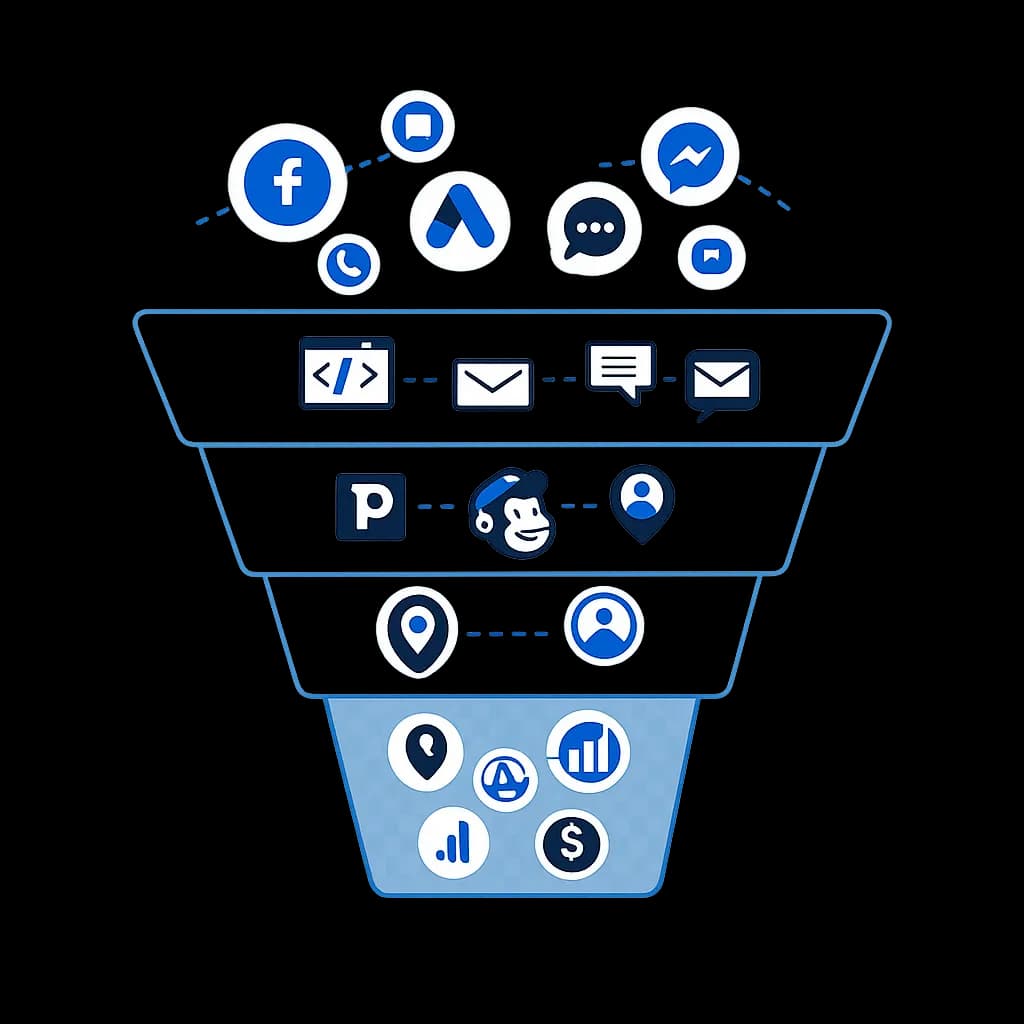
Automation funnel showing lead capture, nurture, routing, and reporting

Why the funnel helps

How the funnel helps

This funnel turns the blueprint into one visible flow: where leads come from, how they enter the CRM, how follow-up happens, and what gets tracked once the opportunity becomes real. It helps buyers understand the system as one connected path instead of a list of disconnected automations.

Top of funnel clarity

It shows how ads, calls, chat, and inbound messages can all feed one intake path instead of being handled in separate silos.

Mid-funnel follow-up and routing

It makes the nurture layer concrete: forms, email, SMS, booking, and CRM stages work together so the team knows what happens after the first inquiry.

Bottom-funnel visibility

It connects routing, reporting, and revenue signals, which helps explain why the build matters operationally and not just visually inside the CRM.

Manual friction

Common automation gaps

Most chiropractic businesses do not need more software first. They need cleaner structure around the repeatable intake, follow-up, and handoff work that already exists.

Front-desk follow-up overload

New-patient calls, texts, and web inquiries all compete for attention during an already busy schedule.

Reminder consistency affects attendance

When reminder workflows are weak, no-shows and reschedules create avoidable administrative churn.

Inactive patients drift away quietly

Patients who stop booking do not always receive a structured follow-up that brings them back into care.

System design

How the chiropractic system should be structured

The system needs to make the first visit easier to book while keeping patient communication manageable afterward.

01

New-patient intake capture

Collect the basics of the inquiry and move the patient toward the right booking flow quickly.

02

Appointment reminder sequence

Use confirmation and reminder automation that supports attendance without requiring manual outreach.

03

Visit status visibility

Track who is booked, completed, canceled, or at risk so the front desk can focus on exceptions.

04

Patient reactivation follow-up

Create a light-touch path for patients who have gone inactive but may be ready to return.

Workflow

Chiropractic inquiry-to-reactivation workflow

The workflow helps the clinic stay organized from the first inquiry through ongoing patient communication.

  1. 01

    Capture the patient inquiry

    Calls, forms, and ads create a patient record and trigger the right intake or booking follow-up.

  2. 02

    Book the first visit

    The system supports appointment confirmation and collects any missing details before the patient arrives.

  3. 03

    Automate reminders and status updates

    Reminder flows and stage changes keep booked, completed, and missed appointments visible.

  4. 04

    Reactivate inactive patients

    Patients who stop booking can enter a structured follow-up path that feels intentional rather than random.

Expected operational shift

What should improve for a chiropractic clinic

The aim is smoother front-desk operations and more dependable patient follow-up.

Qualitative outcomes only

These pages deliberately avoid invented client metrics. The purpose is to show the operational changes the system is meant to create before real proof assets are added later.

Less front-desk admin around new patients

The clinic can automate the first-response and reminder work that often interrupts the day.

Better appointment attendance support

Patients receive clearer reminder communication before the visit.

More organized reactivation follow-up

Inactive patients become easier to reach back out to through a defined cadence.

Common questions

Frequently asked questions

This section answers the practical questions people usually have before they decide whether a chiropractic automation build is worth exploring.

How can automation improve lead follow-up for chiropractic?

Automation helps chiropractic by connecting lead capture, intake, reminders, and next-step follow-up in one system. Instead of relying on manual callbacks, inbox checks, or memory, the team gets a clearer process for moving inquiries toward new patients + reminders and keeping momentum after the first contact.

What should an automation system include for chiropractic?

A practical chiropractic automation setup should usually include new-patient intake capture, appointment reminder sequence, visit status visibility, plus clean reporting and stage visibility. The goal is to make intake, routing, booking, and follow-up easier to manage day to day instead of creating more admin work.

Can GoHighLevel work for chiropractic?

Yes, if the account is built around the real workflow instead of a generic template. For chiropractic, GoHighLevel is most useful when it handles forms, calendars, SMS or email follow-up, pipeline stages, and reporting in a way the team can actually use consistently.

Is this a real case study or a representative blueprint for chiropractic?

This page is a representative blueprint. It is meant to show how TkTurners would structure automation for chiropractic and answer common buyer questions before real screenshots, testimonials, or measured results are added.

Can this chiropractic workflow be adapted to our current process?

Yes. The blueprint is a starting structure, not a rigid template. During implementation, the intake questions, routing rules, calendars, follow-up timing, and reporting can be adjusted to match your lead sources, team workflow, and current tools.

Map it to your process

Need a chiropractic workflow that helps the front desk stay ahead?

We can tailor this blueprint to your intake process, scheduling setup, and patient follow-up needs.