How to Deliver Same-Day Teacher Feedback Without Late-Night Paperwork
How to Deliver SameDay Teacher Feedback Without LateNight Paperwork Every instructional leader knows the feeling: it’s 7:00 PM on a Tuesday, and your desk is piled high with handwritten notes, observation templates, and halffinished evaluation drafts. You spent the day in classrooms observing inspir

How to Deliver Same-Day Teacher Feedback Without Late-Night Paperwork
Every instructional leader knows the feeling: it’s 7:00 PM on a Tuesday, and your desk is piled high with handwritten notes, observation templates, and half-finished evaluation drafts. You spent the day in classrooms observing inspiring teaching, but now the administrative burden threatens to crush your evening. Worse yet, by the time your feedback reaches a teacher’s inbox 48 to 72 hours later, the momentum of the lesson has dissolved into memory.
Instructional coaching relies on momentum. When feedback is delayed, its actionable power plummets, transforming helpful guidance into a stressful compliance ritual. The good news? You do not have to choose between providing impactful feedback and having a personal life. By implementing same-day feedback workflows, live capture techniques, and micro-debrief protocols, school leaders can deliver transformational coaching before the final bell rings—without bringing a single stack of paperwork home.
1. The Hidden Cost of Delayed Feedback: Why Speed Matters in Instructional Coaching

The Pedagogy Forgetting Curve: Why 48-Hour-Old Walkthrough Notes Lose Impact
The human brain quickly discards nuances of past events unless reinforced immediately. In educational psychology, the retention curve applies not only to students but also to adult learners. When a coach observes a teacher during a third-period math lesson on Tuesday, both the coach and the educator experience rapid memory decay regarding specific student interactions, precise questioning techniques, and classroom dynamics.
When notes are delivered two or three days later, teachers often struggle to recall the specific context of the observation. A comment like "Consider deepening student engagement during guided practice" feels abstract when the lesson happened 72 hours ago. Immediate, contextualized feedback yields higher retention of instructional practices and faster implementation of new classroom strategies. Same-day feedback captures the lesson while the emotional and pedagogical context is fresh in everyone's minds.
The Administrative Bottleneck: How Unfinished Notes Accumulate Evening Cognitive Load
The traditional observation model relies on heavy document creation: long, narrative-style write-ups that take 45 to 60 minutes per teacher. When an administrator conducts four classroom walkthroughs in a single day, that translates to nearly three hours of administrative reporting. Because school days are packed with student supervision, parent calls, and urgent crises, these notes inevitably spill into late nights.
This bottleneck creates severe cognitive load and decision fatigue. Holding unwritten observation logs in working memory throughout the day drains mental energy, leaving leaders exhausted and prone to burnout. Administrative overload is a major contributor to principal turnover. Shifting to lightweight, same-day feedback mechanisms eliminates the backlog, protecting leaders' evening cognitive reserve and well-being.
Shifting Culture: How Real-Time Instructional Coaching Builds Trust Over Evaluation Anxiety
When feedback takes days or weeks to arrive, observations feel punitive and formal—resembling a high-stakes performance audit rather than a supportive growth partnership. Teachers spend the intervening days wondering, "What did I do wrong?" or "What is my administrator typing up?"
Fast-turnaround feedback disrupts this anxiety cycle. When an educator receives low-stakes, growth-oriented notes by 3:00 PM on the day of the walkthrough, observation becomes a transparent, routine dialogue. Over time, this rapid feedback loop fosters psychological safety. Teachers begin to view walkthroughs not as scary inspections, but as continuous, collaborative opportunities for professional growth.
2. In-Class Live Capture Techniques to Streamline Teacher Observations
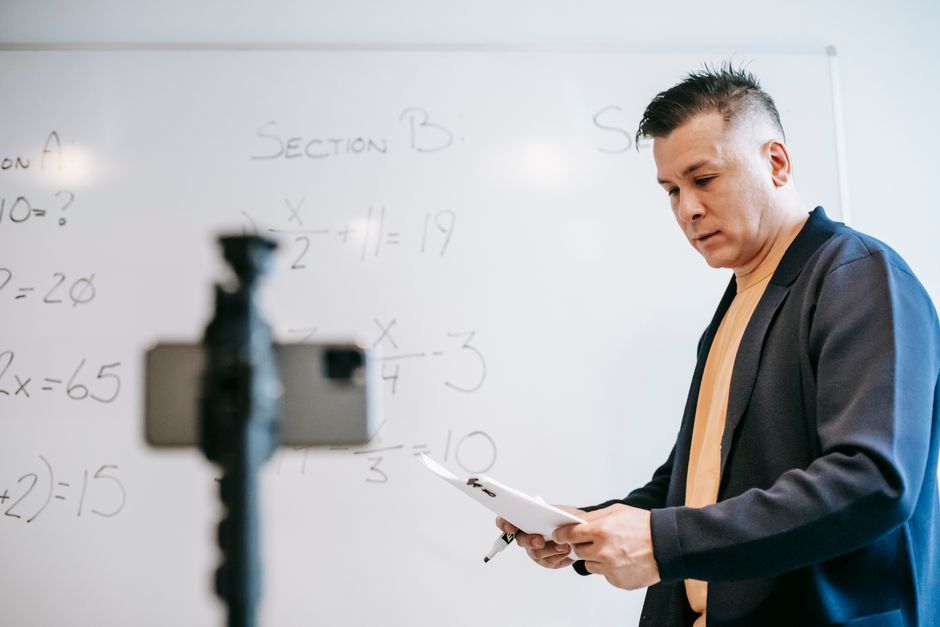
Standardized Micro-Rubrics: Moving from Endless Free-Text to Tagged Observable Behaviors
The biggest time-sink in classroom observations is transcribing raw narrative. Typing pages of verbatim dialogue forces observers to play court reporter rather than instructional analyst. To streamline this process, school leaders should adopt standardized micro-rubrics with pre-tagged observable behaviors.
Instead of writing a paragraph about student participation, leaders can tap structured checkboxes aligned with core instructional frameworks, such as Charlotte Danielson's Framework for Teaching or Robert Marzano's Instructional Strategies. Tags might include:
[Check for Understanding]Cold-calling, exit tickets, whiteboards.[Pacing]Efficient transitions, timed activities, crisp instructions.[Rigor]Higher-order questions, peer discussion, text-dependent analysis.
By selecting pre-defined categories and adding brief 1-2 sentence evidence clips, leaders can document a 15-minute walkthrough in under three minutes.
Voice-to-Text & Quick Audio Dictation: Capturing Nuance Without Slowing Down
Typing on a small phone or tablet screen during a walk-through can look disconnected and slow down note-taking speed. Utilizing secure voice-to-text dictation or recording quick voice memos immediately after leaving the classroom offers a faster, more natural alternative.
Using built-in mobile dictation tools or specialized coaching applications, administrators can step into a quiet hallway and speak their observations aloud in 60 seconds:
"Mr. Davis had excellent pacing during the warm-up. 95% of students were on task within 30 seconds. One growth area: ensure wait time increases from 2 seconds to 5 seconds during the main guided question."
Modern speech recognition software formats spoken thoughts into structured text, dramatically reducing manual typing time.
Mobile-First Micro-Forms: Finalizing Raw Documentation Before Leaving the Classroom
The golden rule of zero-paperwork leadership is simple: Never leave a classroom without finishing nearly all of the documentation. Relying on scribbled legal pads with the intent of "typing it up later" guarantees late-night administrative work.
Using mobile-optimized forms (such as Google Forms, Microsoft Forms, or specialized school leadership apps), leaders can fill out essential walkthrough data on an iPad or smartphone while standing at the back of the room. By the time you open the classroom door to step into the hallway, the observation entry is complete, tagged, and saved into your central database.
3. The 5-Minute Micro-Debrief Protocol: Fast Classroom Feedback Strategies

The "One Glow, One Grow" Framework: Structuring Post-Observation Conversations
Feedback conversations do not need to take 45 minutes in a formal conference room to be effective. In fact, lengthy debriefs often dilute key priorities. A targeted 5-minute conversation built on the "One Glow, One Grow" framework delivers maximum clarity and actionable impact.
- The Glow: A specific, evidence-based compliment celebrating a successful strategy (e.g., "Your student transition between group work and independent reading was seamless today.").
- The Grow: One clear, bite-sized piece of actionable feedback for immediate refinement (e.g., "Tomorrow, try asking students to turn and talk before taking answers to raise participation.").
As Paul Bambrick-Santoyo highlights in Leverage Leadership, focusing on a single high-leverage action step leads to immediate implementation, whereas giving five suggestions leads to cognitive overload and inaction.
The Hallway Touchpoint: Conducting Immediate Debriefs Before the Next Period
Waiting for scheduled planning periods can delay debrief conversations by days. The "Hallway Touchpoint" capitalizes on micro-moments throughout the school day—during class transitions, cafeteria supervision duty, or right after the bell rings.
A 90-second hallway interaction immediately reinforces strong instruction:
"Hey Sarah, loved how you used the timer during guided practice in 2nd period! The energy was great. Let's try adding a quick partner check next time. I’ll send a 2-line recap note now!"
These casual, high-frequency touchpoints demystify coaching and build strong relational trust between teachers and leadership.
Co-Designed Action Steps: Securing Instant Teacher Buy-In and Practical Accountability
Feedback works best when it is co-constructed rather than delivered as a top-down mandate. During a micro-debrief, prompt the teacher to formulate the solution:
"What is one quick tweak you can make to your 4th-period class to check for understanding before the independent work section?"
When teachers articulate the action step themselves, buy-in skyrockets. The coach simply confirms the plan and agrees on a quick follow-up timeline (e.g., "Awesome! I'll pop in for 3 minutes tomorrow at 10:15 AM to see it in action.").
4. Leveraging AI and Automated Workflows to Reduce Administrative Paperwork

Automated Summary Generators: Converting Raw Notes into Polished Professional Logs
Generative AI and automated workflow tools are transforming administrative efficiency in education. Leaders no longer need to spend hours editing shorthand bullet points into formal prose.
By feeding bulleted observation notes into secure, privacy-compliant AI assistants, administrators can instantly convert raw observations into encouraging, professional coaching summaries.
Example Input:
"10:15 AM Math 7. Great classroom culture. Warm call used effectively. Need clearer directions on worksheet step 2."
AI Output:
"Thank you for welcoming me into your classroom today! Your positive culture was evident as students responded enthusiastically to warm calling. To maximize student clarity during independent work, consider adding visual step-by-step instructions on the board for step 2."
This automated synthesis drastically reduces manual writing time while maintaining a professional and supportive tone.
One-Click Feedback Delivery: Automating Email Summaries and Follow-Up Triggers
Integrating no-code automation platforms like Zapier or Make with tools like Google Sheets or Microsoft Forms allows leaders to create seamless feedback delivery pipelines.
When an observer submits a micro-form on their phone:
- An automated script populates a centralized observation tracking sheet.
- A formatted, personalized email summary is automatically sent to the teacher's inbox within 5 seconds.
- A calendar reminder is automatically scheduled for a 3-day follow-up check-in.
This eliminates manual copy-pasting, sending emails, and calendar updates, saving school leaders hours every week.
Building a Modern Tech Stack: Essential Tools for Real-Time School Leadership
To achieve same-day teacher feedback, leaders must equip themselves with an efficient digital tool stack. Recommended tools include:
| Tool Category | Recommended Platforms | Key Capability |
|---|---|---|
| Micro-Forms & Surveys | Google Forms, Microsoft Forms, Jotform | Rapid data capture on mobile devices with structured tags. |
| Instructional Coaching Apps | Whetstone, TeachBoost, Sibme | Custom walkthrough templates, automated analytics, and debrief tracking. |
| Workflow Automation | Zapier, Make, Google Apps Script | Instant email triggers, calendar scheduling, and data sync. |
| Speech-to-Text & AI | Otter.ai, Mobile Dictation, ChatGPT Enterprise | Fast voice notes and instant summary generation. |
Leveraging these tools ensures that technology handles the administrative heavy lifting while leaders focus on human relationships.
5. Implementation Playbook: Transitioning Your Team to Same-Day Feedback

Setting Staff Expectations: Normalizing High-Frequency, Low-Stakes Walkthroughs
Before launching a same-day feedback initiative, clear communication with school staff is essential. Teachers may feel intimidated if administrative visits suddenly double in frequency.
Host a staff meeting to explain the shift in philosophy:
- Frame the goal: Explain that walkthroughs are moving from rare, high-stakes formal evaluations to frequent, low-stakes coaching touchpoints designed to support growth.
- Share the protocol: Show teachers the micro-rubrics and the "One Glow, One Grow" structure so there are no surprises.
- Promise promptness: Commit to delivering feedback by the end of the school day so teachers never have to wait anxiously for results.
Calendar Defense: Time-Blocking Strategies for Observations and Micro-Debriefs
The biggest barrier to consistent observations is a reactive schedule dominated by daily fires. To protect instructional leadership time, administrators must practice strict "Calendar Defense."
- Block non-negotiable walkthrough windows: Schedule two 45-minute observation blocks daily (e.g., 9:00–9:45 AM and 1:15–2:00 PM). Treat these blocks like urgent appointments.
- Batch micro-debriefs: Reserve 15 minutes right after each observation block or before dismissal to deliver quick face-to-face or digital notes.
- Protect desk-free zones: Leave your office during scheduled times without carrying unnecessary files; bring only your mobile capture device.
Protecting dedicated time for instructional coaching directly correlates with improved classroom practices and school-wide achievement.
Tracking Feedback Velocity: Measuring Administrative Efficiency and Teacher Growth Impact
What gets measured gets managed. To evaluate the success of your new feedback system, track metrics focused on speed, frequency, and outcome:
- Feedback Turnaround Time (Velocity): Measure the average hours elapsed between classroom observation and feedback delivery. Goal: under 4 hours.
- Observation Frequency: Track how many times each teacher receives actionable coaching per month. Goal: 2 to 4 touchpoints monthly.
- Action Step Completion Rate: Monitor whether teachers successfully implement agreed-upon "Grow" strategies during follow-up visits.
By monitoring these indicators, administrative teams can continuously refine their workflows, eliminate procedural bottlenecks, and foster a thriving school culture centered on continuous growth.
Conclusion: Transformative Coaching Starts with Sustainable Leadership
Delivering same-day teacher feedback is not just an administrative efficiency hack—it is a foundational strategy for accelerating student growth and building a positive school culture. When leaders eliminate delayed observation notes, they replace evaluation anxiety with real-time coaching partnerships built on trust, clarity, and rapid implementation.
By adopting live mobile capture, 5-minute micro-debrief protocols, and automated workflows, you can provide teachers with the timely insights they deserve while taking back your evenings. You don't have to sacrifice your personal well-being to be an extraordinary instructional leader. Start small this week: choose one classroom walkthrough, apply the "One Glow, One Grow" framework, and deliver your notes before leaving the building.

Next step
Need help applying this pattern?
Bring the bottleneck and the stack. We will map the first implementation path.