The chatbot answers from generic knowledge instead of account data.
All case studiesIndustry problem
AI Business Data Chatbots
Operators and founders who want AI answers grounded in real business systems instead of generic chatbot responses. A business data chatbot is only valuable when it can reach the right records safely. Without connected systems, permissions, retrieval, and data freshness, the interface becomes another place where users ask questions and still verify answers manually.
Common failures
Where the workflow usually breaks
Business data is uploaded manually and becomes stale.
Permissions do not match the source systems.
The model cannot explain which records informed the answer.
The workflow does not lead to a useful business action.
System requirements
What a custom system needs to handle
Secure connectors to the systems that hold operating data.
A retrieval layer that can find relevant records quickly.
Permission boundaries for users and connected accounts.
Human review for sensitive financial, customer, or operational outputs.
Clear success metrics such as lookup time saved or reporting speed improved.
First step
Start with the operating map
Pick one high-value business question, identify the source systems needed to answer it, and prove that the answer can be retrieved reliably.
Internal proof cluster
Related proof and next steps
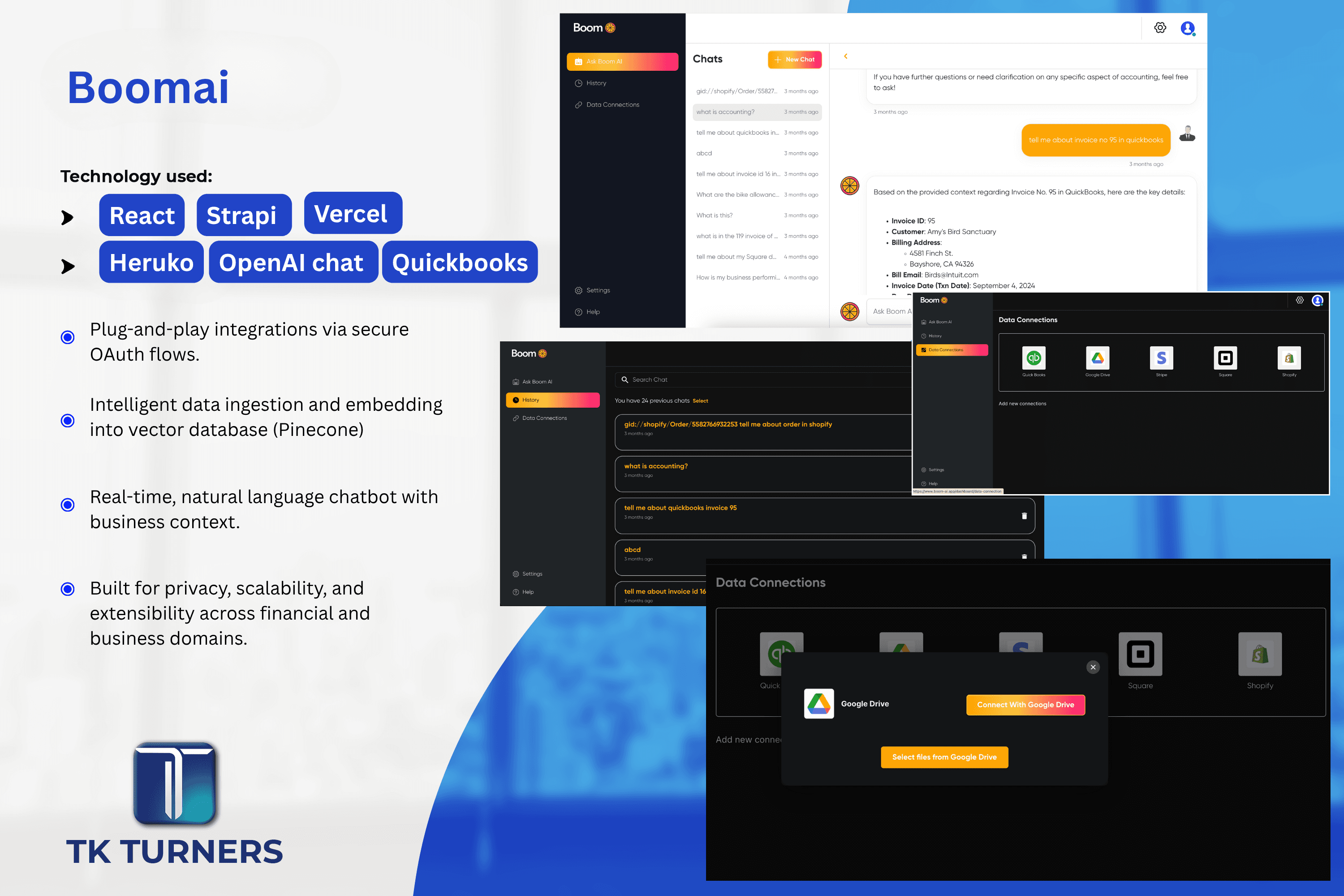
Boom AI
At BoomAI, we’re building OAuth integrations with Stripe, QuickBooks, and Shopify so users can securely connect their official accounts.
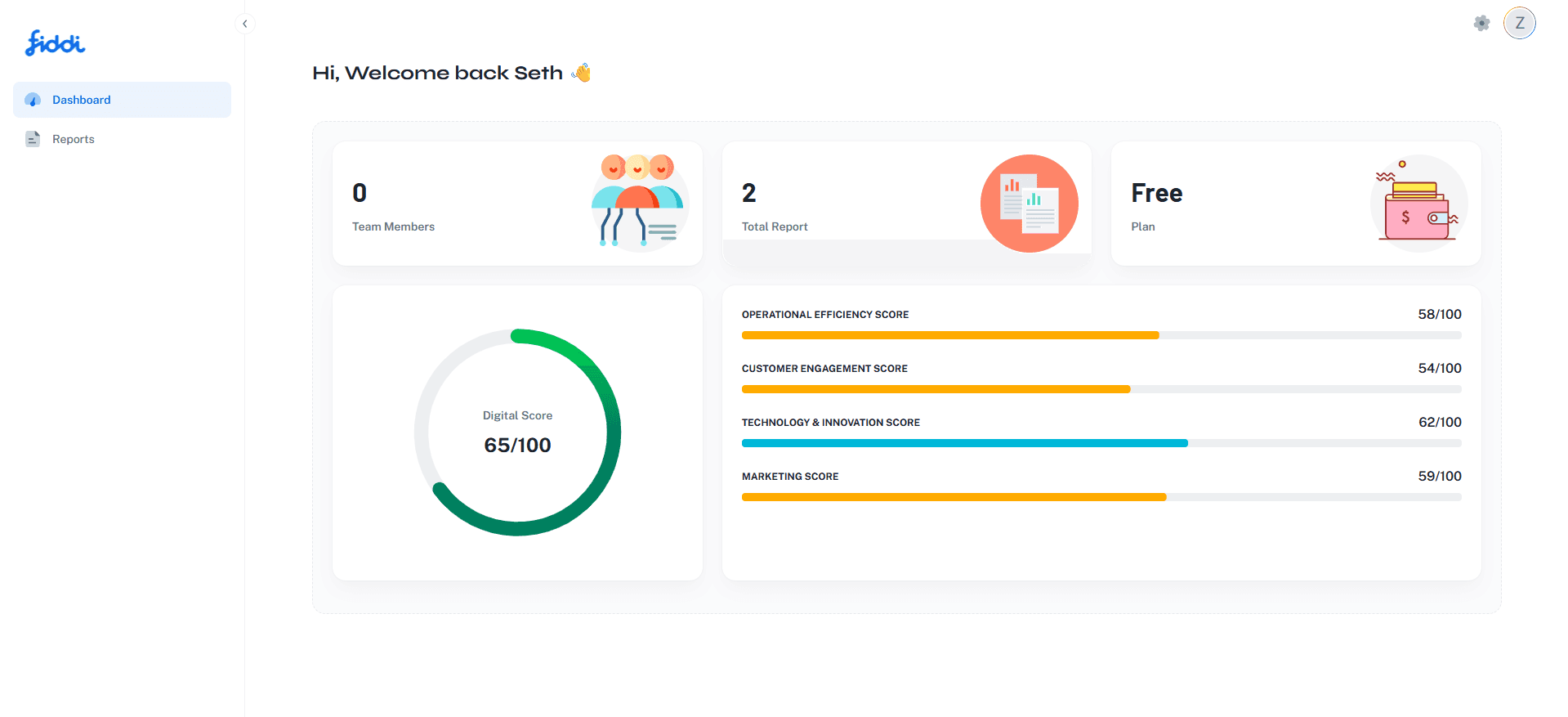
Fiddi.ai — AI Financial Platform, Digital Card & AI Report Builder
Fiddi.ai was one of the major AI-focused SaaS products built around the idea of making financial information, business profiles, and report creation easier for users. The platform was not only a simple dashboard.
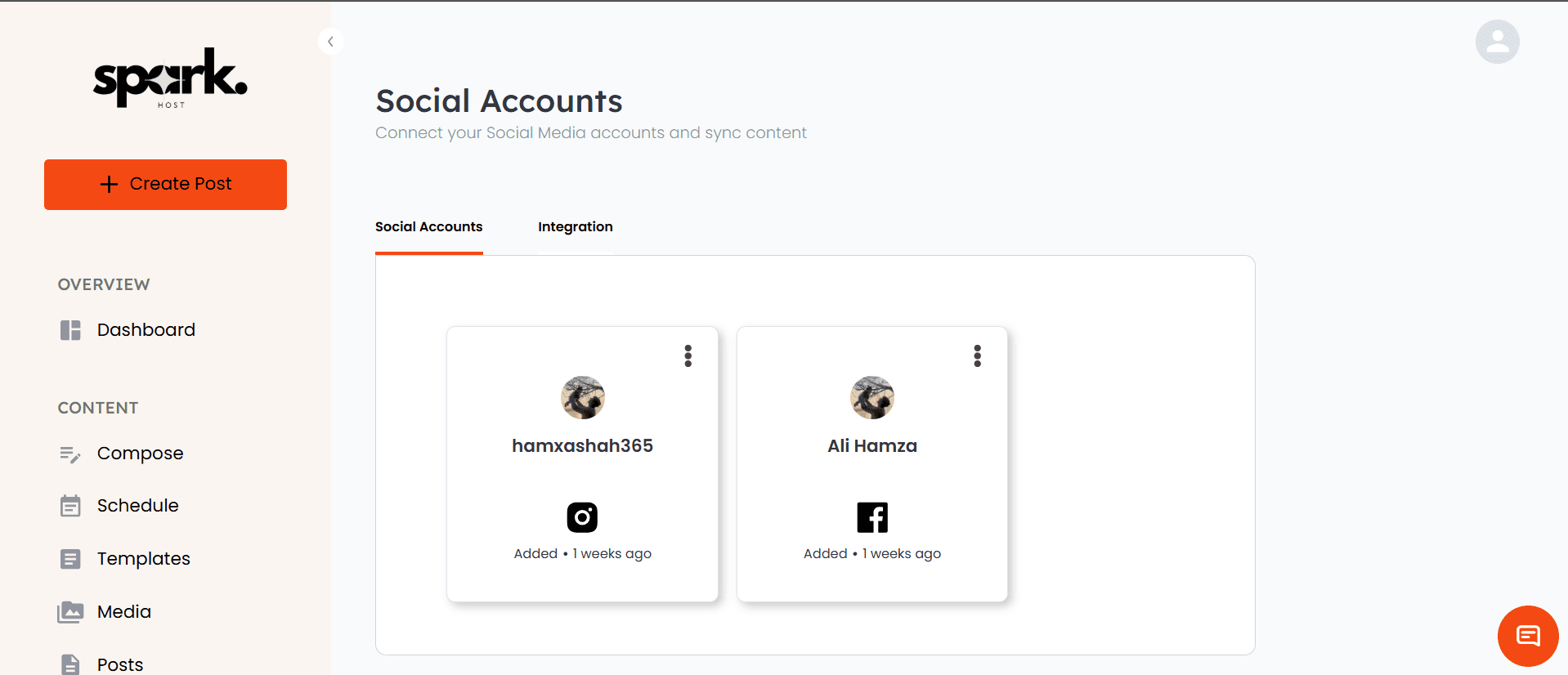
Spark Host
Spark Host is a social media and email marketing dashboard for hospitality and property-focused businesses.
Search questions
Questions this page helps answer
Can AI answer questions from private business systems?
Yes, but the implementation must connect securely to source systems, respect permissions, retrieve relevant records, and keep answers grounded in current data.
What is the main risk with business data chatbots?
The main risk is giving confident answers from incomplete, stale, or unauthorized data. Retrieval and permissions matter more than the chat UI.
Which business systems can an AI chatbot connect to?
Common systems include ecommerce platforms, accounting tools, CRMs, payment processors, documents, support platforms, and internal databases.