Modern Airport Terminal Navigation: Enhancing Passenger Experience and Driving Non-Aeronautical Revenue
Modern Airport Terminal Navigation: Enhancing Passenger Experience and Driving NonAeronautical Revenue Modern air hubs are evolving from simple transit points into sprawling megacomplexes featuring worldclass dining, luxury retail, and immersive entertainment. However, navigating these massive archi

Modern Airport Terminal Navigation: Enhancing Passenger Experience and Driving Non-Aeronautical Revenue
Modern air hubs are evolving from simple transit points into sprawling mega-complexes featuring world-class dining, luxury retail, and immersive entertainment. However, navigating these massive architectural facilities remains one of the primary sources of travel anxiety. As flight volumes surge and terminal footprints expand, legacy static signage fails to meet the expectations of today's digitally connected passengers. This navigation friction creates a severe operational bottleneck: anxious travelers rush straight to their boarding gates, bypassing valuable concession hubs along the way. Modernizing airport terminal navigation through digital indoor positioning, dynamic interactive touchpoints, and real-time passenger analytics resolves this challenge. By transforming indoor wayfinding from a basic facility utility into an engine for passenger engagement and commercial growth, airport operators can simultaneously elevate the passenger experience and unlock substantial non-aeronautical revenue streams.
1. The Modern Wayfinding Bottleneck: Why Legacy Airport Navigation Fails Today's Traveler
1.1 The Cognitive Load of Travel: How Navigation Friction Fuels Passenger Stress
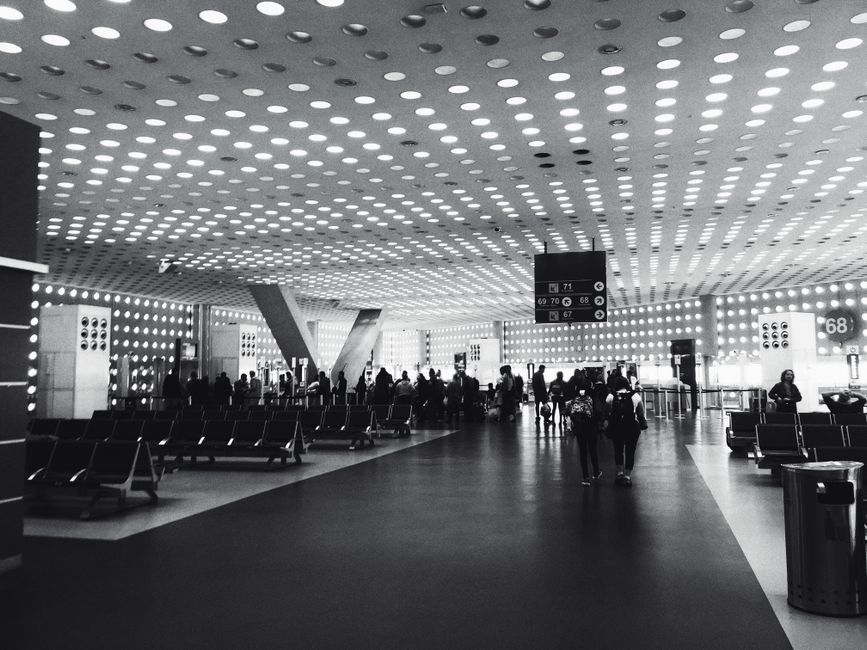
Navigating a modern multi-terminal airport presents an immense cognitive burden. Travelers must absorb complex physical environments, rigid flight schedules, security screening protocols, and constant ambient noise from overhead announcements and crowded concourses. Cognitive research in environmental psychology demonstrates that orientation friction elevates stress hormones, impairing spatial decision-making and triggering acute "gate anxiety"—the persistent fear of missing a flight. When passengers struggle to verify their precise location or estimate walking times to distant gates, their instinctual response is to move directly to the departure gate, actively ignoring secondary concourses, lounges, and retail plazas.
1.2 The Hidden Cost of Static Signage: Bypassing Retail and Dining Hubs
For decades, static overhead directional signs served as the baseline standard for terminal wayfinding. However, static signage suffers from structural limitations in contemporary airport operations. Fixed physical signs cannot adapt to real-time gate changes, temporary concourse maintenance, security queue spikes, or personal physical mobility needs. Furthermore, static signs provide virtually no visibility for non-aeronautical tenants situated off main linear thoroughfares. According to industry intelligence from Airports Council International (ACI World), non-aeronautical revenue—comprising retail, food and beverage, duty-free, and commercial services—represents nearly 40% of global airport revenue. By failing to highlight hidden commercial zones, legacy static signage directly suppresses tenant sales and revenue sharing potential.
1.3 Reimagining Airport Indoor Wayfinding: Transitioning from Utility to Commercial Catalyst
To capture lost commercial opportunities, airport authority executives must redefine the strategic role of indoor navigation. Wayfinding should no longer be treated as a passive infrastructure component meant only to channel bodies from security to aircraft doors. Instead, it represents a dynamic digital engagement layer. By deploying intelligent indoor positioning systems (IPS) and spatial intelligence platforms, airports can guide travelers along customized, intuitive routes. This digital transformation reduces travel stress, opens clear sightlines to retail hubs, and converts idle, anxious transit time into intentional, high-margin commercial engagement.
2. Architecting the Next-Gen Navigation Ecosystem: Core Indoor Positioning Technologies
2.1 Infrastructure Foundations: Integrating BLE Beacons, Wi-Fi RTT, and Ultra-Wideband (UWB)
Establishing a dependable indoor positioning environment across multi-level steel-and-glass terminal architecture requires a multi-technology hardware foundation:
- Bluetooth Low Energy (BLE) Beacons: Low-cost, battery- or line-powered beacons installed across concourse ceilings provide reliable proximity detection and device triangulation across vast open areas.
- Wi-Fi Fine Timing Measurement (Wi-Fi RTT / IEEE 802.11mc): Utilizing enterprise Wi-Fi access points, Wi-Fi RTT calculates precise distance based on signal round-trip time, delivering meter-level accuracy without requiring manual device pairing.
- Ultra-Wideband (UWB): Representing the apex of high-precision spatial positioning, UWB offers sub-decimeter location accuracy. Highly resilient to signal multipath reflections common in industrial architecture, UWB underpins advanced turn-by-turn navigation, robotic assistance, and automated asset tracking.
A hybrid positioning architecture combining BLE, Wi-Fi RTT, and UWB guarantees uninterrupted location tracking across subterranean concourses, multi-tiered security plazas, and expansive gate lounges.
2.2 Immersive Passenger Interfaces: AR Turn-by-Turn Mobile Apps vs. App-Free Web Solutions
Delivering intuitive spatial guidance requires adaptable digital interface solutions designed for diverse traveler preferences:
- Augmented Reality (AR) Turn-by-Turn Mobile Apps: AR navigation overlays interactive 3D directional vectors, distance markers, and point-of-interest (POI) callouts onto the live camera stream of a smartphone. This eliminates map interpretation confusion and delivers an engaging visual experience.
- App-Free Web-Based Solutions (Web-Based IPS): To overcome app-download friction—since many travelers decline downloading single-use venue applications—airports are deploying WebAssembly and WebGL indoor maps accessible via mobile browsers. Scanning a QR code at check-in or on terminal signage immediately launches a smooth, interactive 3D venue map without requiring an installation from an app store.
2.3 Smart Touchpoints: Dynamic Interactive Kiosks and Contextual Digital Signage
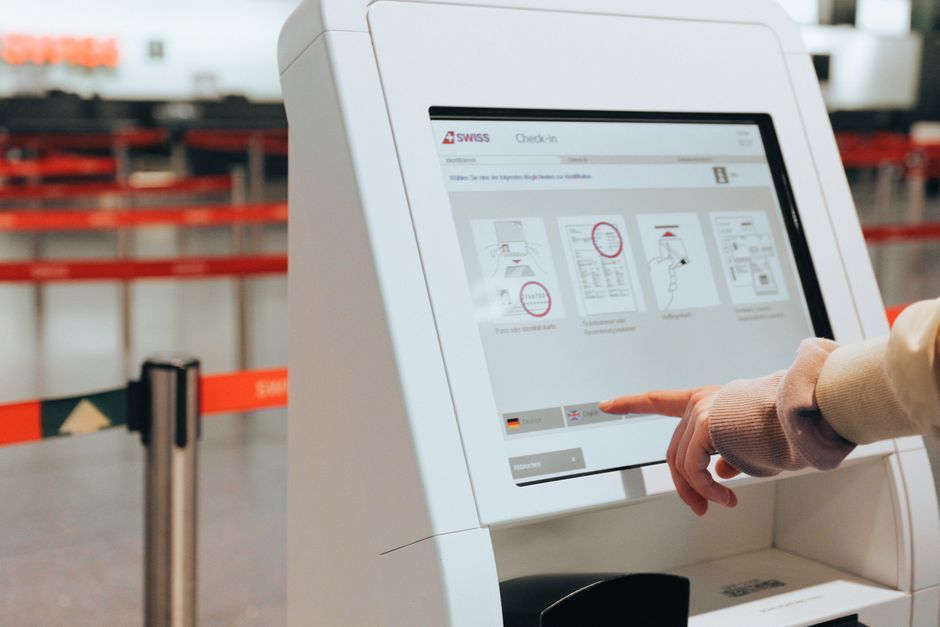
Physical touchpoints remain essential for broad accessibility across all age groups and travel demographics. Next-generation interactive kiosks feature high-definition capacitive touchscreens equipped with optical boarding pass scanners. Scanning a ticket instantly plots a step-by-step personalized route to the gate, complete with estimated walking times, elevator routing options, and tailored dining suggestions along the path. Simultaneously, contextual digital signage networks connected to central operational databases automatically alter directional guidance based on live crowd density and security queue congestion.
3. Monetizing Passenger Flow: Driving Airport Concession Visibility and Dwell Time

3.1 Geofenced Promotions: Delivering Hyper-Personalized Offers via Location-Aware Signals
Location-aware navigation turns physical proximity into targeted commercial opportunities. By defining precise virtual geofences around duty-free stores, premium lounges, and specialty dining options, airport commercial marketing systems can trigger contextual mobile notifications. For instance, a traveler strolling near a luxury retail concourse 50 minutes prior to boarding can receive a time-sensitive digital promotion directly to their smartphone. When combined with passenger profile preferences and real-time flight schedules, geofenced marketing drives store conversion without cluttering the user interface.
3.2 Real-Time Queue Transparency: Converting Gate Anxiety into High-Margin Retail Dwell Time
The primary obstacle to passenger commercial spend is schedule uncertainty. Travelers routinely decline sitting for a meal or exploring retail outlets because they cannot accurately predict security wait times or gate distance. Modern wayfinding ecosystems integrate computer vision analytics and LiDAR sensors to display live, verified wait times for security checkpoints, passport control, and food court counters. By giving passengers transparent control over their schedule, digital wayfinding replaces gate anxiety with relaxed dwell time—encouraging travelers to spend extra time at high-margin dining and retail venues.
3.3 Interactive Map Callouts: Directing Foot Traffic Beyond Primary Gate Concourses
In complex multi-concourse airports, secondary retail areas and upper-level dining mezzanines frequently suffer from low foot traffic volume. Interactive digital maps dynamically surface featured concessionaires, seasonal pop-up shops, and quiet workspace zones using interactive map pins and rich media popups. Routing algorithms can actively propose curated detour itineraries—such as "The Artisan Food Hall Route"—showing travelers exactly how a short 4-minute detour fits safely within their remaining pre-boarding window.
4. Harnessing Operational Intelligence: Optimizing Terminal Layouts with Navigation Analytics

4.1 Passenger Heatmaps and Flow Analytics: Mapping High-Traffic Corridors and Dead Zones
Every digital interaction with an indoor navigation network produces actionable spatial data. Aggregated, anonymized positioning telemetry generates comprehensive terminal heatmaps revealing foot-traffic velocity, bottleneck zones, and transit density patterns. Terminal operations management can instantly identify structural congestion around security checkpoints, as well as underutilized "dead zones" in secondary concourses.
4.2 Data-Driven Real Estate Management: Optimizing Tenant Placement and Leasing Strategies
Historically, airport concession management relied on static passenger enplanement figures to negotiate tenant leases. Navigation analytics equips commercial directors with precise data on foot-traffic volume, impression rates, and customer dwell duration outside individual storefronts. This spatial data supports sophisticated commercial planning:
- Justifying premium rental rates for high-traffic concourse intersections.
- Repositioning underperforming concessions located in low-visibility corridors through digital promotional callouts.
- Optimizing tenant category placement based on passenger demographic flows and flight destination profiles.
4.3 Agile Traffic Management: Dynamic Rerouting During Peak Hours and Flight Delays
When adverse weather or operational disruptions cause sudden flight reschedules, large passenger volumes concentrate around specific gate clusters, causing localized crowding. Connected navigation platforms allow terminal operations teams to dynamically adjust recommended navigation paths in real time. By updating mobile wayfinding applications and digital sign displays, operators can seamlessly redirect non-urgent passenger flows through parallel, less congested concourses—balancing terminal crowd distribution across the entire facility.
5. Strategic Blueprint for Airport Executives: Implementation, Accessibility, and ROI

5.1 System Integration: Connecting Wayfinding Platforms with Airport Operational Databases (AODB)
To maximize operational utility, indoor positioning solutions must integrate tightly with core airport IT systems. Connecting wayfinding servers to the central Airport Operational Database (AODB), Flight Information Display Systems (FIDS), and baggage management feeds via secure open APIs enables real-time updates for gate assignments, schedule changes, and baggage carousel locations. When an unexpected gate change occurs, the navigation system automatically sends an updated turn-by-turn routing alert directly to affected passengers.
5.2 Ensuring Universal Design: Multi-Language Support and Accessible Navigation for All Travelers
Modern terminal infrastructure must fulfill universal accessibility standards. Accessible indoor wayfinding ensures full compliance with international guidelines, including the Americans with Disabilities Act (ADA) and European standards (EN 301 549). Key universal design capabilities include:
- Step-Free Routing: Providing specialized navigation routes for wheelchair users, travelers with heavy luggage, and families with strollers by prioritizing elevators and ramps over escalators and stairs.
- Multilingual Interfaces: Offering instant language toggling across web interfaces, mobile applications, and interactive kiosks to assist global travelers.
- Accessibility and Screen-Reader Optimizations: Engineering web maps to comply with Web Content Accessibility Guidelines (WCAG 2.1) with screen reader support, voice assistance, and high-contrast display modes.
5.3 Measuring Success: Key Performance Metrics from CSAT to Spend Per Enplanement (SPE)
Evaluating the financial and operational return on investment (ROI) for next-generation terminal navigation involves monitoring specific key performance indicators:
- Customer Satisfaction (CSAT) & ASQ Scores: Tracking positive movements in passenger satisfaction benchmarking published by Airport Service Quality (ACI ASQ).
- Spend Per Enplanement (SPE): Quantifying direct increases in non-aeronautical retail and concession revenue per passenger following the rollout of location-based notifications and queue transparency.
- Dwell Time Optimization: Measuring the shift in passenger time allocation from anxious gate waiting to active dwell time in commercial concourses.
- On-Time Performance (OTP): Assessing reductions in missed flight connections caused by orientation delays and spatial confusion.
Modernizing airport terminal navigation is no longer a luxury upgrade—it is a foundational operational strategy for forward-thinking aviation hubs. By replacing static directional signs with intelligent, location-aware digital positioning ecosystems, airport executives can eliminate travel anxiety while unlocking significant non-aeronautical growth. As airports continue to transform into smart travel centers, intuitive digital wayfinding forms the essential link connecting satisfied passengers, prosperous commercial partners, and highly efficient terminal operations.


Next step
Need help applying this pattern?
Bring the bottleneck and the stack. We will map the first implementation path.