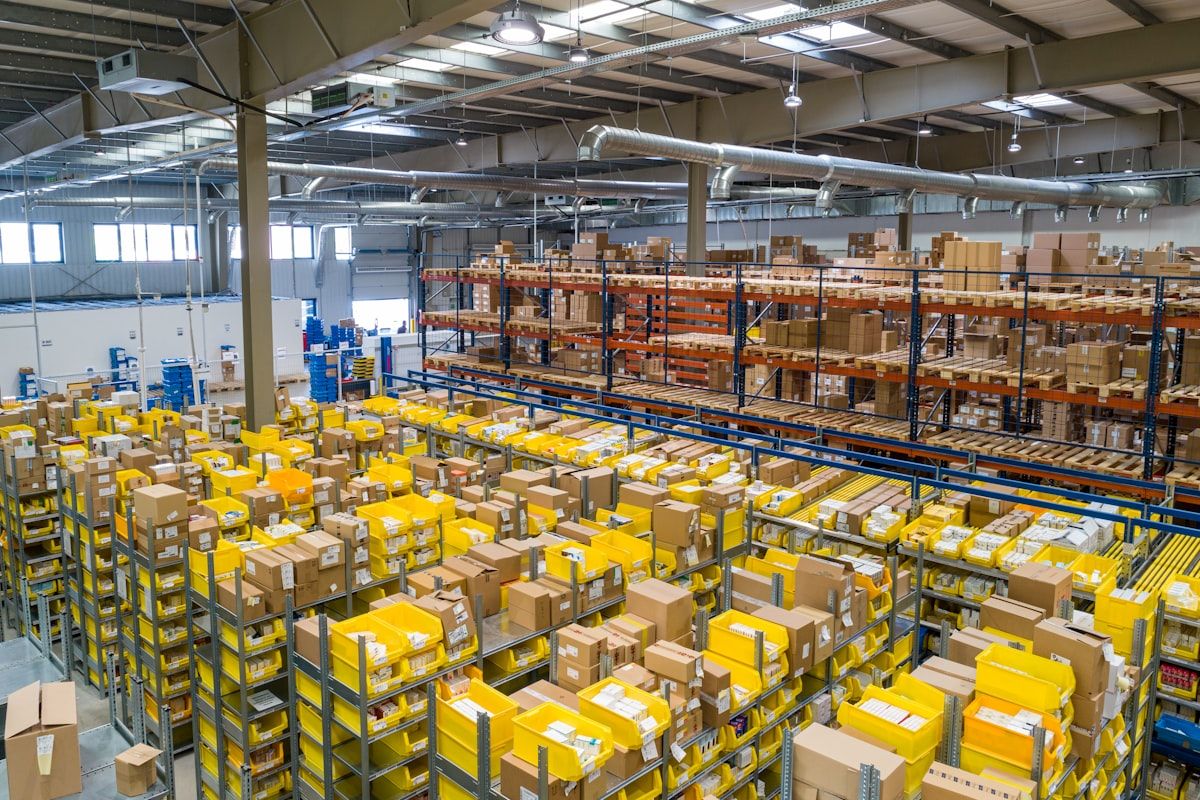
Consider a standard operational scenario at a high-volume physical location. A customer purchases a high-margin outerwear piece online for in-store pickup. Five minutes before their estimated arrival, the customer changes their mind and cancels the order through their customer profile on your storefront.
The storefront records the cancellation, issues a refund event, and marks the transaction as voided. However, the downstream Order Management System (OMS), Warehouse Management System (WMS), and in-store devices never receive the cancellation signal. The outerwear item remains in a designated "held" bin in the store's back room. A store associate, completely unaware of the cancellation, stands waiting at the curbside bay with a physical package that no longer belongs to anyone. Meanwhile, online shoppers looking to purchase that exact unit—which is technically the last available item in local stock—are met with an "out of stock" banner on your storefront.
How long has this exact failure loop been occurring in your omnichannel tech stack? If your system integrations are loosely coupled or lack comprehensive state confirmation, this invisible breakdown is happening daily, creating a silent drain on your margins, labor, and inventory utilization.
The BOPIS Cancellation Sync Problem Nobody Talks About
While retail operators spend significant resources optimizing the forward path of Buy Online, Pickup In-Store (BOPIS)—such as reducing pick times and designing curbside signage—the reverse path is often left as an afterthought. When status updates fail to flow backward, the system-wide consequences are immediate and severe.
What "BOPIS Order Cancellation Not Syncing Back to Storefront" Actually Means for BOPIS and Curbside Fulfillment Operations Operational Cost
At its core, BOPIS and curbside fulfillment operations operational cost is heavily driven by the efficiency of inventory allocation and store labor. When a cancellation occurs, the status must update globally across three distinct planes: transactional, orchestration, and physical execution.
When you leave a BOPIS order cancellation not syncing back to storefront unresolved, you are allowing a state disconnect between the transactional layer (the e-commerce storefront) and the orchestration layer (the OMS). The storefront registers the cancellation because that is where the customer initiated the request. However, if the API call or webhook payload designed to sync this state downward to the OMS fails, the OMS continues to treat the inventory as hard-allocated. The operational cost of this failure manifests in locked working capital, inaccurate regional stock levels, and administrative overhead as team members attempt to manually reconcile these discrepancies at the end of the week.
Why BOPIS and Curbside Fulfillment Operations Require Instant Status Updates
To maintain high inventory turns, modern BOPIS and curbside fulfillment operations depend on real-time availability. If a customer cancels an order, that unit must instantly return to the active inventory pool. Without a real-time sync mechanism, the item remains physically isolated in the pickup staging area, unavailable for in-store checkout and hidden from digital buyers. In retail models operating on tight margins and lean regional inventory, having even a handful of high-value units locked in "cancellation limbo" during peak seasons directly suppresses sales velocity.
Why BOPIS Order Cancellation Not Syncing Back to Storefront Gets Misdiagnosed as a POS Issue
When store associates notice cancelled packages sitting indefinitely in pickup bins, the immediate assumption is that the Point of Sale (POS) system failed to scan the return properly. Operations leads often misdiagnose this as a physical training problem or an in-store hardware error.
In reality, this is an integration and state-machine issue. The POS system is designed to record in-store checkouts and cash drawer events; it rarely serves as the primary system of record for digital order orchestration. When an online order is cancelled via the storefront, the signal must flow down to the OMS, which in turn commands the WMS and POS to update their respective inventory counts. Expecting store associates to resolve this via manual POS adjustments is a symptom of a deeper, unaddressed integration gap.
How the Failure Cascade Compounds Across Every System
A single unsynced cancellation event does not remain isolated. It triggers a cascading failure that disrupts every core platform in your architecture.
- Phase 1: Storefront Cancellation: The customer cancels the order online. Due to integration failure, the event is dropped.
- Phase 2: OMS Stagnation: The order status remains "Ready for Pickup". Inventory stays reserved, creating a phantom reservation.
- Phase 3: WMS Inefficiency: The picking list is not updated. Associates pick and stage an order that is already void.
- Phase 4: Floor Execution Break: Handheld terminals show stale data. Associates spend time locating and handling dead packages.
OMS Impact: Reserved Inventory That Never Releases
The OMS functions as the single source of truth for order routing and inventory availability across your entire network. When a cancellation signal is lost, the OMS maintains a "hard reservation" on the physical units associated with that order. The system assumes the items are still bound for a customer handoff, preventing them from being allocated to incoming digital orders from other channels. Over time, this leads to artificial stockouts, where your systems report zero availability despite physical units sitting untouched on store shelves.
WMS Impact: Pick-Wave Disruption and Labor Misallocation
In larger retail locations with dedicated back-room fulfillment areas, the WMS schedules pick-waves based on open orders. When a storefront cancellation does not propagate to the WMS, the order remains on the active picking queue. Associates spend valuable floor time locating, scanning, and bagging items that have already been refunded.
By the time the pick-wave is complete, the associate has performed redundant labor. The completed order is then staged in a physical pickup bin, where it will sit until a manual audit reveals that the order was voided days prior. The inventory must then undergo a "put-back" process, doubling the labor spent on a non-transactional event. We trace these cascading WMS and store-floor issues extensively in our analysis of the BOPIS pickup status cascade breakdown.
Storefront Impact: Customer-Facing Stock Discrepancy and Cancellation Gaps
For the customer, the storefront is their window into your brand. If they cancel an order but see their online account page still displaying the status as "Ready for Pickup," it creates profound confusion. Customers will call customer service lines or send support emails to verify if the refund actually processed.
Simultaneously, the storefront's local store inventory count remains deflated. If your store has only one unit of a specific SKU, and that SKU is tied up in an unsynced cancelled order, the storefront will display "Out of Stock" to local shoppers. This directly drives away high-intent local buyers who would have otherwise visited the store or selected curbside pickup.
In-Store Systems Impact: Staff Acting on Stale or Contradictory Information
Modern in-store fulfillment relies on mobile handheld terminals or RF scanners that direct store associates through their daily tasks. When these devices display outdated information, it undermines staff confidence in the system.
An associate may receive a curbside pickup alert for a customer who has arrived, only to find that when they scan the staging bin, the order has been marked as cancelled on the customer's phone screen but remains active on the store terminal. This discrepancy forces the store associate to stop their workflow, consult a manager, and manually look up the transaction in the storefront backend—creating an embarrassing operational bottleneck directly in front of the customer.
TkTurners Operator Observation: In our implementation work auditing multi-channel retail stacks, we regularly see storefronts displaying inventory as "available" when it is actually phantom-reserved for orders cancelled by the customer hours ago. This happens because the cancellation webhook is treated as a low-priority, fire-and-forget payload with no retry logic or state-machine validation. We have documented similar infrastructure sync issues in our guide on order status webhook confirmation loss issues.
The Hidden Operational Cost of Inaction
Leaving this integration gap unresolved is not a minor inconvenience; it is a direct drain on your store's bottom line. The costs compound silently across multiple operational vectors.
Phantom Inventory Holding Across Channels
When inventory is locked in a cancelled-but-unreleased state, it acts as "phantom inventory." It exists physically, but it is invisible to your digital sales channels. For fast-moving retail brands, holding phantom inventory across 20 or 30 physical locations during a seasonal launch can lock up substantial capital in unsellable stock. The longer these sync issues persist, the higher the holding costs and the greater the risk of seasonal markdowns on items that should have been sold weeks ago. Our guide on analyzing BOPIS cancellation sync costs details how these holding patterns directly erode product margins.
Staff Time Wasted on Orders That No Longer Exist
Store labor is one of the largest controllable expenses in retail operations. Consider the labor lifecycle of an unsynced cancellation:
- Initial Pick: Associate walks the floor, finds the item, and scans it.
- Staging: Associate prints a label, bags the item, and places it in a dedicated holding area.
- Curbside Wait: Associate monitors the queue, waits at the bay, and attempts a handoff for a cancelled order.
- Audit and Return: Days later, a manager identifies the stale order, voids it in the local database, and another associate returns the item to the sales floor.
Every minute spent on this cycle is time taken away from customer service, merchandising, and store maintenance. When multiplied across hundreds of cancellations per month, this wasted effort represents a significant operational leakage.
Customer Experience Erosion at the Pickup Moment
Omnichannel retail succeeded because it promised convenience. A customer choosing curbside pickup expects a frictionless, swift handoff. When an unsynced cancellation causes systemic confusion—such as an associate attempting to hand over an item the customer already cancelled, or a customer arriving to find that their active order was accidentally cleared out due to manual store adjustments—it destroys brand trust. The customer is left waiting in their vehicle while staff scramble to resolve system discrepancies, transforming a convenient experience into an administrative hassle.
Data Integrity Degradation That Complicates Reporting and Reorders
For retail planning and finance teams, clean data is essential for demand forecasting and inventory replenishment. When cancellation data is not synchronized in real time, seasonal sales velocity reports become skewed.
Demand planners look at historical sales and allocation data to place future purchase orders. If cancelled orders are not clean-synced and backed out of velocity figures, your planning software will over-order slow-moving SKUs. Meanwhile, the finance team must deal with reconciliation discrepancies between storefront stripe capture reports and WMS inventory movement logs, forcing hours of manual spreadsheet auditing.
Why the Problem Gets Progressively Harder to Fix
Like many integration failures, a broken cancellation sync is not a static problem. It degrades actively over time, building up technical and operational debt that becomes exponentially harder to resolve the longer it is left unaddressed.
| Timeframe | Technical Status | Operational Impact | Average Fix Complexity |
|---|---|---|---|
| Week 1 | Simple payload mismatch or webhook failure. | Minor inventory discrepancy; store staff manually override. | Low: Correct the payload parsing or webhook routing rules. |
| Month 2 | Custom physical workarounds established. | Store staff rely on spreadsheets/Slack; data drift increases. | Medium: Map manual workarounds and retrain staff. |
| Month 6 | Multi-system data debt and system entropy. | Financial reconciliation mismatches; skewed demand forecasting. | High: Cleanse historical database logs and adjust ERP records. |
Data Debt: Accumulating a Multi-System Reconciliation Burden
When systems operate out of sync for months, the historical data mismatch grows. You cannot simply turn on a new integration sync without reconciling the legacy delta first. If your OMS and storefront have been misaligned for ninety days, running a bulk sync post-facto can trigger a mass-cancellation wave or mass-refund event across old orders, creating absolute chaos for your bookkeeping team. Resolving this requires meticulous database audits to separate stale open orders from true completed transactions before implementing a clean sync.
Process Drift: Temporary Workarounds Hardening into Permanent Habits
In the absence of a working technical sync, store associates will adapt to survive. They develop manual workarounds:
- Writing cancelled orders on a physical whiteboard in the breakroom.
- Sharing screenshots of storefront admin pages via local Slack channels to double-check order validity.
- Manually overriding inventory levels in the POS at the end of every shift.
These manual patches are highly prone to human error, impossible to scale, and make onboarding new staff incredibly slow. More dangerously, they build "process drift," where the actual day-to-day store operations completely diverge from the official software guidelines, making the implementation of any future system updates highly disruptive.
System Entropy: How Layering Integrations Multiplies the Blast Radius
As your retail business grows, you will inevitably layer new systems onto your architecture. You might add a loyalty platform, a new regional 3PL, or third-party marketplace listings (such as Target+ or Amazon Shop Local).
If your core OMS WMS storefront integration is built on a broken cancellation loop, every new endpoint you add multiplies the complexity. The broken sync signal propagates to your loyalty platform, clawing back points for orders that were never officially cancelled in the ERP, or signaling a marketplace that you have stock when you do not. What was once a simple web-hook issue between two platforms becomes a multi-system debugging puzzle. We see these compounding integration challenges regularly in our comprehensive BOPIS order cancellation cross-system breakdown.
The Sync Cost Curve: Why Delayed Resolution Escalates Implementation Expenses
Fixing an integration gap in its first week is a straightforward task: you identify the failed webhook payload, update the middleware routing rule, and run a validation test.
By month three, however, the fix is no longer purely technical. It now requires mapping custom store workarounds, cleansing thousands of lines of corrupted inventory history, correcting historical tax filings, and retraining store associates who have become accustomed to manual workarounds. The implementation cost curve rises steeply, transforming a minor system adjustment into a costly operational turnaround.
What a Sound BOPIS Cancellation Sync Looks Like
A robust, enterprise-grade BOPIS cancellation flow must be event-driven, transactional, and resilient to transient network failures.
The Event Chain: From Trigger to Storefront Resolution
When a cancellation is triggered—whether by the customer online or a store manager via the POS—the system must execute a deterministic sequence of events:
- Initiation: The storefront captures the cancellation request and publishes a BOPISORDER.CANCELLED event to your central integration middleware.
- OMS Acknowledgment: The middleware routes this event to the OMS. The OMS instantly updates the order status to "Cancelled" and transitions the inventory reservation from "Hard Staged" back to "Available to Sell" (ATS) at the specific retail location.
- WMS Update: The OMS pushes an instruction down to the store's WMS. If the pick-wave has not started, the picking ticket is deleted. If the item has already been picked, a high-priority "Return to Shelf" task is pushed to the associate's handheld scanner.
- Storefront Inventory Write-Back: With the physical inventory officially released in the OMS, the updated ATS count is written back to the storefront, making the unit immediately available for purchase by other local shoppers.
- Customer Confirmation: Only after the downstream systems acknowledge the status change does the storefront send the formal "Cancellation Confirmed" email to the customer, ensuring that the customer communication reflects the exact system state.
This sequence ensures alignment with modern ecommerce execution standards, such as those detailed in the Shopify Fulfillment Network documentation and enterprise-grade designs found in the Microsoft Dynamics 365 Commerce BOPIS documentation.
Where Most Stacks Break: Common Handoff Points That Fail
Most integration breakages occur at the boundaries between systems. Common failure points include:
- Webhook Timeout: The storefront sends a cancellation webhook to the middleware, but the middleware fails to acknowledge the payload within the storefront's timeout window, causing the storefront to drop the message.
- API Rate Limits: During high-volume holiday events, the volume of inventory updates exceeds the API limits of your ERP or OMS, causing cancellation messages to be queued indefinitely or silently discarded.
- Lack of Dead-Letter Queues (DLQs): If the OMS is temporarily offline for maintenance when a cancellation occurs, the integration middleware attempts to deliver the payload, fails, and discards the message without alerting your operations team.
Minimum Viable Fix: A Clean OMS WMS Storefront Integration
To close this loop without rearchitecting your entire IT ecosystem, you must implement a resilient middleware layer that guarantees message delivery. A reliable OMS WMS storefront integration requires:
- Idempotent API Endpoints: Ensuring that if a cancellation message is sent multiple times due to network retries, it only processes once, preventing duplicate refunds.
- Asynchronous Message Queuing: Implementing a message broker (such as RabbitMQ or AWS SQS) that holds cancellation events in a queue until the receiving system confirms processing.
- Automated Alerting: Setting up automated monitoring that immediately pings your operations team (via Slack or email) if a message remains stuck in a dead-letter queue for more than 15 minutes, allowing you to catch sync issues before they manifest on the store floor.
From Chaos to Practical Leverage: Closing the Loop
Fixing your BOPIS cancellation sync is not just about avoiding errors; it is about building a stable foundation that unlocks significant operational leverage for your retail brand.
How Curbside Pickup Operations Management Benefits from Real-Time Sync
A healthy integration directly optimizes curbside pickup operations management. When cancellation statuses update in real time, store floor managers can allocate labor with complete confidence. Pickers only work on valid, active orders. Staging shelves remain free of dead inventory. Curbside runners spend their time greeting customers and executing smooth handoffs, resulting in faster turn times, higher labor productivity, and a frictionless experience that keeps customers returning to your brand.
How the Integration Foundation Sprint Solves This Failure Mode
At TkTurners, we do not believe in running open-ended, multi-month consulting projects to solve basic operational leaks. We address these system breakdowns through a highly focused, fixed-scope Integration Foundation Sprint.
In this sprint, we map the exact state machine of your order lifecycle, inspect your active webhook payloads, and locate the precise handoff boundaries where your cancellation signals are being dropped. We then implement a resilient event queue with guaranteed retry logic, clean up legacy data debt, and build robust write-backs between your storefront and OMS. The result is a stable, highly visible operating foundation that allows your retail business to move faster without manual drag.
Framing the System Architecture Discussion with Your Implementation Partner
If you are preparing to address these BOPIS sync gaps, you need to ask your internal technical team or external integration partner direct, operational questions:
| Architectural Area | Critical Inquiry to Pose |
|---|---|
| Message Delivery | "How does our middleware handle transient network drops when routing storefront cancellations to our OMS? Do we use active dead-letter queues?" |
| Inventory State | "What is the precise time delay between a storefront cancellation event and the physical inventory unit being marked as 'Available to Sell' in our local store stock?" |
| Exception Alerting | "Do we have real-time monitoring that alerts our operations team if a cancellation payload fails to write back to the store terminals, or are we relying on manual store audits to find the drift?" |
By shifting from manual workarounds to automated, event-driven integrations, you turn operational chaos into a source of competitive leverage. The cost of leaving your BOPIS cancellation sync unresolved will only rise. Resolving it today stabilizes your foundation, protects your margins, and ensures your technology operates at the exact level of your ambition.
Turn the note into a working system.
The Integration Foundation Sprint is built for omnichannel operators dealing with storefront, ERP, payments, and reporting gaps that keep creating manual drag.
Review the Integration Foundation SprintBilal Mehmood
Co-founder
Bilal Mehmood is a TkTurners co-founder focused on AI automation, integrations, GoHighLevel infrastructure, and implementation systems that reduce manual drag for business operators.
Relevant service
Review the Integration Foundation Sprint
Explore the service lane